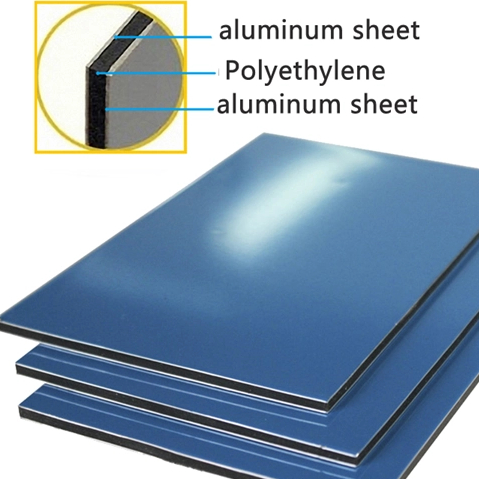
Views: 0 Author: Site Editor Publish Time: 2026-10-25 Origin: Site
Aluminum Composite Panel (ACP) manufacturing demands exact engineering tolerances. The prepainted aluminum coil acts as the visible exterior for modern structures. It constantly faces harsh weather conditions. Therefore, any substrate or coating failure ruins the final architectural product. Fabricators often struggle against inconsistent coating thickness. They face poor paint adhesion and unexpected color shifts. These issues cause high scrap rates during ACP routing and folding. Installation errors multiply when materials fail to meet specifications. Ultimately, poor material quality damages a fabricator's credibility and bottom line.
A standardized color coated aluminum coil quality inspection protocol solves this problem. It offers the only reliable way to validate supplier capabilities. This guide outlines the core testing dimensions you must understand. We cover coating integrity, adhesion strength, and color consistency. You will learn how to shortlist reliable coil manufacturers. This ensures your continuous ACP production runs smoothly and profitably.
The fabrication process quickly exposes hidden material defects. When utilizing aluminum coil for acp production, defects rarely remain isolated. A single poorly cured coil creates a cascade of production failures. It can ruin hundreds of square meters of composite panels. Often, operators only detect the issue late on the lamination line. By then, the factory has already wasted valuable resources.
Field failures present massive financial and legal liabilities. Imagine panels peeling a year after installation on a skyscraper. Sun exposure causes UV degradation and chalking. Poorly manufactured paint will delaminate from the aluminum skin. These field failures trigger expensive warranty claims. You must pay for replacement materials. You also bear the massive cost of replacement labor. The damage to your brand reputation often proves irreparable.
Evaluating the true cost requires a long-term perspective. Cheaper coils often bring a remarkably high rejection rate. This downtime costs you severe financial losses. You waste expensive LDPE or fire-retardant (FR) core materials. Scrapped panels eat directly into your profit margins. Sourcing pre-validated, high-quality coil prevents these operational disasters. It guarantees smoother manufacturing and confident project deliveries.
The physical resilience of the paint dictates the ACP lifespan. Proper curing ensures the surface withstands environmental stress. Improper curing creates soft surfaces. These soft coatings scratch easily during transit and installation. Uneven paint thickness causes premature weathering. It also triggers visual discrepancies across large building facades.
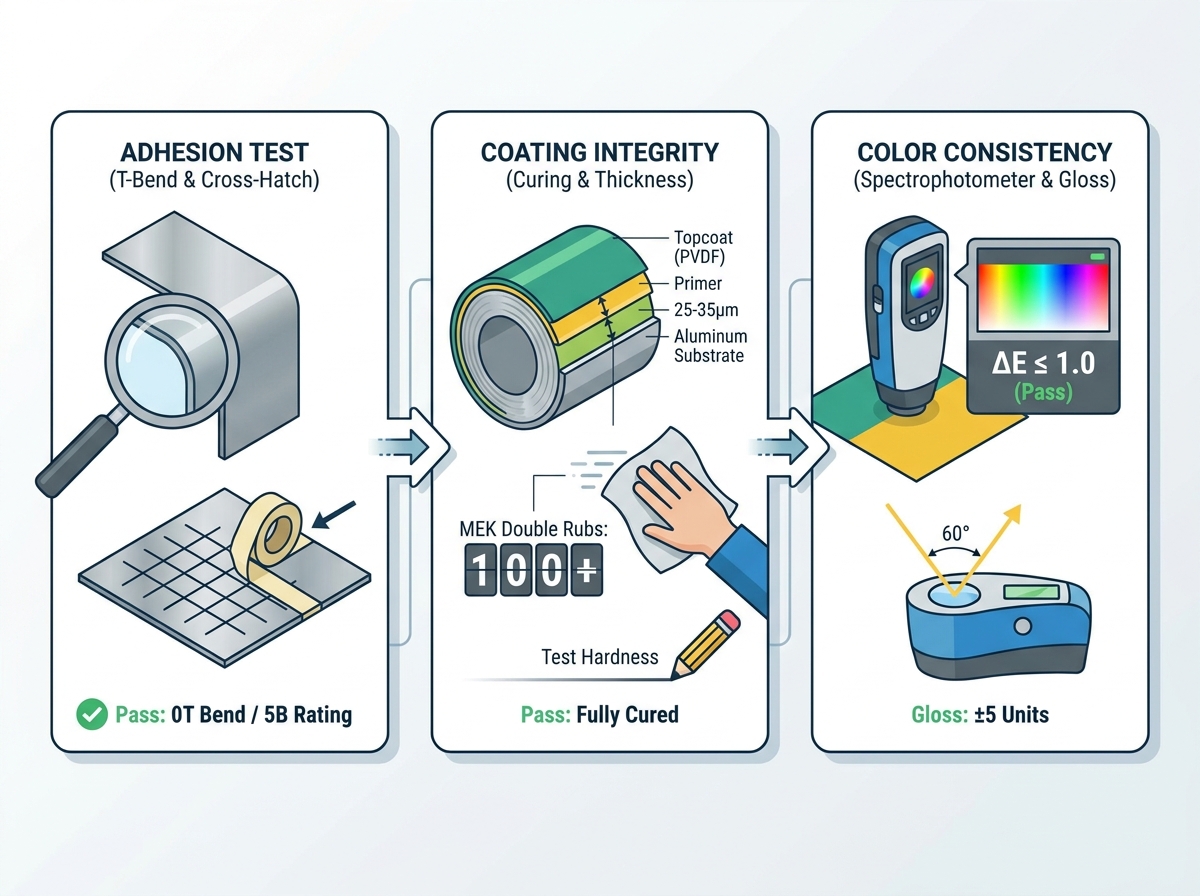
You must monitor several key inspection dimensions to guarantee durability. Film thickness testing requires precise micrometer tools. Primer and topcoat layers must meet exact specifications. For example, standard PVDF systems require 25 to 35 microns. Thickness variations cause uneven wear. They also induce color metamerism under varying light conditions.
Solvent resistance serves as a critical color coated aluminum coil coating test. The MEK (Methyl Ethyl Ketone) double rub test reveals curing quality. You aggressively wipe the surface using MEK solvent. This action determines if the paint system fully cross-linked. Under-cured paint easily rubs off the metal. This indicates a severe production failure at the coating plant. Standard protocols demand over 100 double rubs without exposing bare metal.
The Pencil Hardness Test (ASTM D3363) evaluates scratch resistance. It determines how much physical abuse the panel can survive. Technicians push standardized graphite pencils across the finish. They check for gouges or surface ruptures. This resistance proves vital for surviving heavy handling.
When assessing pvdf coated aluminum coil quality, strict standards apply. Always verify compliance with the AAMA 2605 specification. This standard dictates a 70% fluoropolymer resin content. This ratio guarantees exceptional long-term weatherability. Below this threshold, panels degrade rapidly under harsh UV exposure.
Standard Coating Integrity Tolerances| Test Dimension | Standard / Method | Acceptable Passing Criteria |
|---|---|---|
| Film Thickness | Micrometer / Eddy Current | 25-35 microns (PVDF 2-coat) |
| Solvent Resistance | MEK Double Rub | > 100 rubs with no metal exposure |
| Pencil Hardness | ASTM D3363 | F to 2H depending on paint type |
| Resin Content | AAMA 2605 | Minimum 70% Fluoropolymer |
ACP fabrication represents a mechanically aggressive process. Machines constantly rout deep V-grooves into the panel. They fold the edges at sharp 90-degree angles. If aluminum coil coating adhesion proves weak, failures happen immediately. The paint will flake along the routed grooves. Micro-cracks will form across the folded edges. This renders the panel completely useless for exterior facades.
You must employ rigorous mechanical tests to guarantee bonding strength. The Cross-Hatch Adhesion Test (ASTM D3359) offers a clear baseline. Technicians cut a precise grid into the coating layer. They apply specialized standardized tape over the grid. They pull the tape off rapidly. You must look for a 5B rating. This rating means zero percent of the paint removed.
T-Bend testing simulates the extreme folding stress of fabrication. It evaluates the flexibility of the cured paint. Technicians bend the coated metal back onto itself. They evaluate the radius in "T" intervals like 0T, 1T, or 2T. Good adhesion means zero cracking on the bend. It also means no paint loss when taped. For sharp architectural cassettes, you need superior T-bend performance.
Impact resistance testing provides another crucial metric. Operators strike the reverse side of the panel aggressively. This strike deforms the aluminum substrate outward. The front coating must stretch without fracturing. It must never detach from the substrate. If it shatters, the primer failed to bond properly.
Large commercial facade projects require thousands of square meters of paneling. Suppliers often deliver these batches over several months. Minor color deviations create disastrous visual results. Even marginal shifts look like a checkerboard once installed. A continuous building elevation magnifies these tiny differences.
Maintaining strict prepainted aluminum coil color consistency requires digital precision. Human eyes remain highly subjective. Lighting conditions easily trick our perception. Therefore, color must be quantified mechanically. We rely on advanced spectrophotometer analysis. We measure the Delta E (ΔE) variance between batches. You should require a ΔE variance of less than 1.0. For premium solid colors, demand a ΔE of ≤ 0.5 compared to the master sample.
Gloss levels directly impact human color perception. Two panels with identical pigment mixtures look different if their gloss varies. A matte finish absorbs light differently than a high-gloss finish. Gloss meters check reflectance at standard angles. The industry typically uses a 60-degree measurement angle. Suppliers must keep gloss within a tight tolerance, usually ± 5 units.
Visual and metamerism checks remain an important secondary validation. We inspect the coil under standardized lighting conditions. We use D65 daylight, UV, and fluorescent lighting. Light booths simulate these distinct environments perfectly. This confirms the color matches under different weather and indoor conditions. A paint formulation might match in daylight but clash at night.
You must move beyond polished spec sheets when sourcing materials. Beautiful brochures do not guarantee factory floor reliability. You need to evaluate a manufacturer’s actual execution capability. You must verify their ability to deliver consistent quality daily.
Conducting a rigorous factory audit separates elite suppliers from average ones. Use a structured approach to evaluate their hardware and protocols.
Focus heavily on how the factory handles non-conforming materials. Ask them to explain their rejection protocols. A good factory proudly explains how they quarantine bad coils. They never attempt to slip marginal products into a large shipment.
Sourcing color-coated aluminum for ACP demands rigorous risk mitigation. Relying strictly on the lowest price invites catastrophic failures. These failures happen during factory fabrication or years after facade installation. A structured inspection protocol protects your business reputation and profit margins.
Your next steps require clear action. Prioritize suppliers who openly share their standard operating procedures. Ask for physical samples before committing to large orders. Run these samples through your own fabrication equipment. Test the routing and folding yourself.
A: While all tests matter, the T-Bend and Cross-Hatch adhesion tests are the most critical for fabricators. If the paint cracks or flakes during routing and folding, the panel is instantly rendered unusable, regardless of its color accuracy.
A: For commercial architectural applications, a ΔE of ≤ 1.0 is the industry standard for solid colors, meaning the color difference is generally imperceptible to the human eye. Metallic finishes may have slightly wider tolerances due to flake orientation.
A: The MEK (Methyl Ethyl Ketone) test involves aggressively rubbing the coated surface with a solvent-soaked cloth. Fully cured, high-quality PVDF coatings will resist over 100 double-rubs without exposing the primer or bare metal. Failure indicates under-cured paint that will chalk and fade rapidly in the field.
A: Pretreatment cleans the aluminum of rolling oils and applies a chemical conversion layer. Without this layer, even the highest-grade PVDF paint cannot form a strong chemical bond with the aluminum, leading to inevitable peeling and corrosion over time.