
Views: 0 Author: Site Editor Publish Time: 2026-09-22 Origin: Site
Buyers constantly face a difficult tension in material procurement. Do you choose the convenience of standard off-the-shelf stock? Or do you wait for specialized production runs? Standard sizes offer fast delivery. Standard colors seem highly convenient for tight schedules. Yet, these immediate benefits often mask significant hidden expenses. You might encounter high fabrication waste. You could face premature weathering in harsh environments. Brand inconsistency is another frequent issue across large facades.
Transitioning to custom material represents a major strategic decision. You must carefully balance project longevity against Minimum Order Quantities (MOQs). Fabrication workflows demand exact tolerances to maintain profitability. In this comprehensive guide, we explore exactly when you should shift strategies. You will learn how to identify costly failure points in standard inventory. We will show you how tailored specifications ensure lasting structural integrity. Ultimately, customizing your order transforms your procurement from a simple purchase into a calculated manufacturing advantage.
We often assume standard stock suits every application. This assumption quickly leads to costly project overruns. You must identify the exact failure points of off-the-shelf inventory. Consider your current fabrication floor. Standard widths frequently fail to match required panel dimensions. This size mismatch routinely yields 15% or more in raw material scrap. You end up paying for material you simply throw away.
Environmental factors expose further limitations. Standard Polyester (PE) coatings struggle outdoors. Heavy UV exposure causes premature chalking. The finish fades much faster than highly engineered alternatives. Your immediate material savings vanish entirely when rapid degradation forces an early replacement. Standard materials simply lack the durability for extreme climates.
A custom order becomes viable under specific conditions. You evaluate the upfront price tag alongside waste reduction. Custom material easily undercuts the steep replacement costs of standard inventory. Your overall project budget benefits greatly from exact sizing. Custom widths eliminate extensive edge trimming. You streamline the entire production process.
We must check our baseline assumptions here. Customization rarely suits small projects. One-off residential repairs do not justify mill runs. However, commercial architectural cladding requires tight tolerances. Large roofing projects demand long-term weather resistance. Specialized appliance manufacturing demands exact color matching. For these intensive applications, bespoke ordering is essential. You protect your profit margins by avoiding excessive scrap.
Selecting the right finish determines your project lifespan. You must carefully evaluate different coating systems. Standard Polyester (PE) coatings work well for interior applications. They suit mild climates perfectly. However, they fail rapidly in harsh environments. Coastal zones demand superior protection. High-UV environments require advanced chemical resistance.
In these challenging scenarios, you need Polyvinylidene Fluoride (PVDF) or High-Durable Polyester (HDP). These custom finishes resist corrosive sea salt. They block destructive ultraviolet rays effectively. Choosing the right color coated aluminum coil specifications ensures your facade retains its original gloss. You prevent chalking and fading for decades.
| Coating Type | Best Environment | Expected Lifespan | UV Resistance |
|---|---|---|---|
| Standard PE | Interiors, mild climates | 5 - 10 years | Low to Moderate |
| HDP | Commercial exteriors | 10 - 15 years | High |
| PVDF / FEVE | Coastal, high-UV zones | 20 - 30+ years | Exceptional |
You must also specify exact gauge and alloy requirements. Using standard 1000 series aluminum for exterior panels invites disaster. You should specify 3000 or 5000 series alloys. These stronger series meet engineered wind load requirements. Customizing the gauge prevents you from overpaying for unnecessary thickness. You achieve the perfect balance of structural rigidity and material weight.
Industry standards dictate specific performance benchmarks. The AAMA 2605 standard represents the highest level of architectural certification. It requires rigorous pretreatment layers. It mandates specific dry film thicknesses. Custom orders allow you to mandate these compliance layers directly. You guarantee 20-to-30-year lifespans by strictly adhering to these global benchmarks.
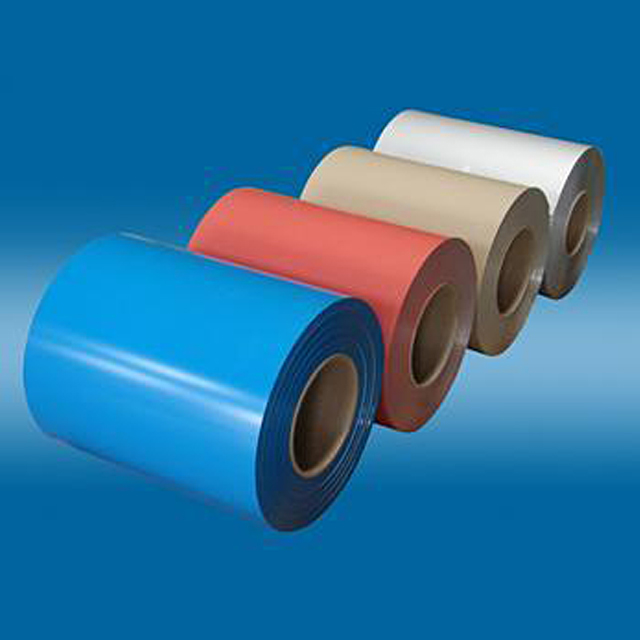
Using standard prepainted stock carries significant implementation risks. Complex roll-forming operations exert immense stress on the metal. Deep-drawing processes stretch the substrate aggressively. Standard aluminium coil often fails under these tight mechanical tolerances. You might observe micro-cracking along the folded edges. The paint may peel away entirely. Sometimes, the metal substrate itself fractures.
These failures halt production immediately. You lose valuable time reworking the damaged panels. The custom solution directly addresses these mechanical limitations. You can customize the temper of the metal. For instance, choosing an H14 temper offers better formability than a rigid H24 temper. You match the metal hardness precisely to your tooling equipment.
You must also specify T-bend flexibility. A 0T or 1T bend rating ensures the coating stretches without cracking. The paint adheres flawlessly during aggressive metalworking. This tight adhesion prevents moisture from penetrating the substrate later. Your final product remains visually pristine and structurally sound.
Efficiency gains on the fabrication floor are profound. Custom slitting provides exact width sizing upon delivery. Your operators skip the preliminary cutting phases entirely. This direct-to-machine workflow reduces labor hours significantly. You also decrease wear and tear on your own slitting equipment. Your production line moves faster. You experience fewer machine jams and quality rejections.
Moving to custom orders requires transparent trade-offs. You cannot order custom runs in tiny batches. Minimum Order Quantities (MOQs) dictate the production schedule. Suppliers typically require 3 to 5 tons per custom color or specification. This volume justifies the extensive coating line setup. Changing colors on a massive industrial line requires downtime and solvent cleaning.
Lead time management becomes a critical project management skill. Standard inventory arrives in days. Custom runs demand careful supply chain planning. You must account for custom color matching processes. The lab formulates the exact shade. They send physical samples for your approval. Once you approve the sample, production scheduling takes over. This entire cycle often spans 3 to 6 weeks.
You need a simple ROI calculation framework to justify the wait. Consider the compounding savings. If custom specifications reduce your material scrap by 10%, you save thousands. If a factory-applied custom finish eliminates a post-fabrication painting step, your labor costs plummet. These hard savings quickly justify the 5-ton MOQ.
Follow these numbered steps to evaluate your volume threshold:
Choosing the right partner guarantees your project success. You must apply strict shortlisting logic. Differentiate clearly between brokers and true manufacturers. Brokers merely resell standard stock. They lack control over the production timeline. A reliable color coated aluminum coil supplier operates in-house coating lines. They maintain direct control over the bare aluminum substrate.
Quality assurance verification is non-negotiable. Do not accept verbal promises regarding durability. You must instruct buyers to look for suppliers providing in-house lab testing data. Request detailed reports on Salt Spray tests. These tests prove corrosion resistance. Ask for MEK rubbing test results to verify curing completeness. Cross-hatch adhesion tests demonstrate how tightly the paint bonds to the metal.
When you find an integrated manufacturer, establish clear next-step actions. Never commit to full tonnage blindly. Always recommend requesting a physical color-matched sample first. This drawdown card lets you verify the exact gloss and shade under real lighting. It ensures your branding aligns perfectly with the final product.
Once you approve the drawdown card, request a localized trial roll. Run this trial roll through your specific fabrication equipment. You want to test the bendability firsthand. You ensure the custom color coated aluminum coil performs without micro-cracking. This physical trial mitigates all production risks before massive capital leaves your account.
Customizing your coil materials represents a calculated investment in manufacturing efficiency. It is never merely an aesthetic choice. Standard materials often introduce severe bottlenecks through high scrap rates and premature finish failures. By tailoring the gauge, alloy, and coating system, you eliminate these expensive setbacks. You ensure flawless roll-forming and decades of environmental resistance.
The upfront requirements of MOQs and lead times dissolve when compared to the long-term project stability. Customization removes secondary painting steps. It protects your brand integrity across massive architectural facades. Your production floor runs leaner, faster, and with significantly less waste.
Audit your current scrap rates immediately. Review your past warranty claims for chalking or peeling paint. If standard materials are eroding your margins, it is time to shift your strategy. Consult with a technical engineer today. Map out your exact specification requirements. Transition toward custom production runs to secure a lasting competitive advantage.
A: Post-painting rarely achieves the uniform mil-thickness and baked-on durability of factory coil coating. Factory processes include chemical pretreatments and high-temperature curing. These steps are impossible to replicate perfectly in the field. Pre-painted custom coils offer vastly superior adhesion and long-term weather resistance.
A: A realistic baseline is usually 3 to 5 metric tons. Some suppliers offer lower MOQs for standard colors requiring custom widths. However, highly specific custom colors require larger runs. The factory must justify the extensive coating line changeovers and solvent cleaning required for unique shades.
A: The standard timeline involves 5 to 7 days for lab formulation. The factory then delivers a physical sample for your review. Once you approve the sample, standard production lead times commence. Expect the entire process to take roughly 3 to 6 weeks depending on factory capacity.


