Views: 0 Author: Site Editor Publish Time: 2026-09-18 Origin: Site
Facade material failure from thermal stress—like buckling, delamination, or coating degradation—creates severe liability. It also drives up maintenance costs for commercial and high-end residential projects. A marble aluminum composite panel gives you the beautiful aesthetic of natural stone at a fraction of the weight. However, specifiers face a distinct engineering challenge. You must understand exactly how composite layers—specifically aluminum skins bonded to a polymer or mineral core—react to sudden temperature shifts. Monolithic materials simply behave differently under the sun. This guide breaks down the underlying thermal dynamics of marble composite cladding. You will learn the critical specification criteria you must evaluate. We also detail the precise installation frameworks required to ensure lasting structural integrity across extreme climates.
Understanding how composite panels react to environmental stressors starts with basic physics. Temperature fluctuations cause continuous dimensional changes in architectural cladding. We must engineer systems that anticipate these inevitable shifts.
Heat introduces kinetic energy into building materials. As atoms vibrate more vigorously, materials expand. Aluminum features a specific thermal expansion coefficient of approximately 2.4 mm/m for a 100°C change. If you install a large format 3-meter panel, it will undergo measurable dimensional changes throughout the day. When the morning sun hits a cold facade, the surface heats rapidly. The aluminum skins begin to stretch. Without proper allowances, this natural expansion creates severe stress against fixed mounting points.
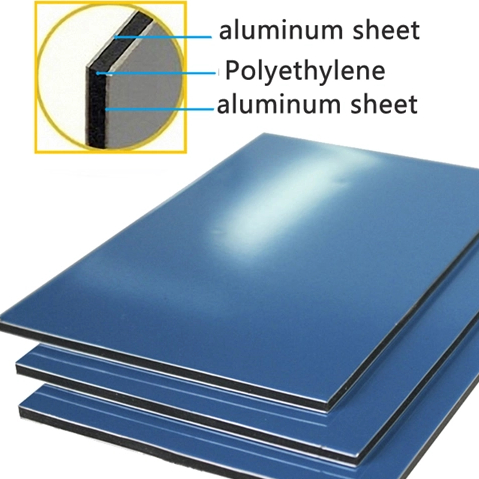
Composite materials rely on multiple layers working together. We must prevent the bimetallic effect. High-quality panels balance the expansion rates of three distinct components: the exterior aluminum skin, the internal core, and the interior skin. When one side of a panel heats up faster than the other, the material naturally wants to bow toward the heat source. Manufacturers counter this by using symmetrical aluminum thicknesses on both sides of the core. This symmetry neutralizes the directional pull, keeping the panel perfectly flat even during intense afternoon heat.
Extreme temperature spikes create intense shear stress between the core and the aluminum skins. The metal expands differently than the polymer or mineral center. You need high-molecular adhesive films to bind these layers safely. Low-grade adhesives soften under high heat or become brittle in freezing conditions. When the adhesive fails to transfer the shear stress evenly, the panel delaminates. The outer skin physically separates from the core, compromising both aesthetics and structural safety. High-performance adhesive films remain elastic, stretching microscopically to accommodate the differing expansion rates.
Different climates attack exterior cladding in unique ways. A facade in Dubai faces completely different thermal challenges than one in Toronto. We must address how these extremes degrade surface finishes and panel integrity over time.
Surface temperatures on facade panels behave differently than ambient air temperatures. Dark colors or heavily patterned marble finishes absorb massive amounts of solar radiation. A panel sitting in 35°C air might reach an astonishing 75°C on its exterior surface. This sustained baking accelerates chemical degradation.
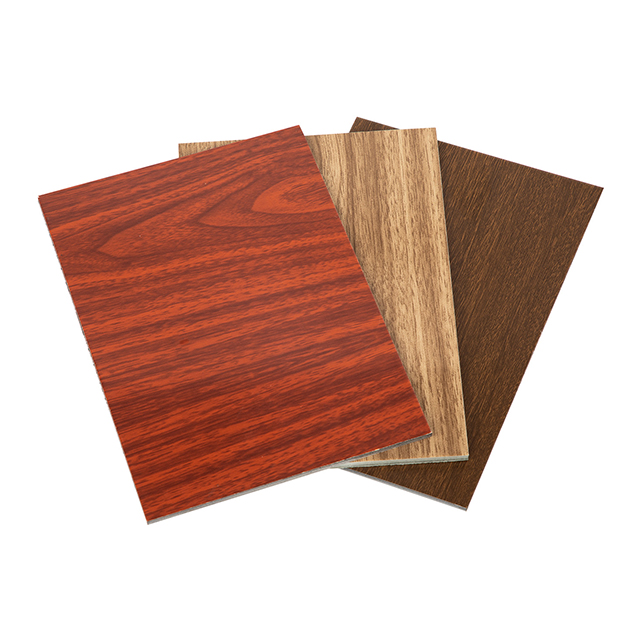
You must select the correct protective coating for these environments. A wood marble finish aluminum composite panel requires premium fluoropolymer coatings like PVDF or FEVE. These advanced paints form incredibly strong carbon-fluorine bonds. They protect the printed marble aesthetic against UV-induced chalking, fading, and gloss loss. Standard PE (Polyester) coatings simply degrade too fast. They break down, lose their sheen, and eventually expose the raw aluminum to the elements.
Freezing climates introduce the threat of moisture. When temperatures drop below freezing, water trapped in building joints expands by about 9%. This expansion generates incredible hydraulic pressure. Freeze-thaw cycles aggressively test panel edges and sealant joints.
If unsealed edges allow water to penetrate the adhesive layer, the ice will pry the aluminum away from the core. However, ACM offers a distinct advantage over natural building materials. Real stone is naturally porous. It absorbs rain, freezes, and suffers from spalling—a process where chunks of the stone flake off. Aluminum composite materials are entirely non-porous. By utilizing proper edge routing and sealing techniques, you completely eliminate the risk of moisture ingress, making ACM far superior for sub-zero climates.
You cannot specify exterior cladding blindly based on visual appeal alone. You must rigorously review specific marble aluminum composite panel specifications to guarantee long-term climate resilience.
The internal core dictates much of the panel's thermal stability. Standard Polyethylene (PE) cores are thermoplastic. They soften significantly when exposed to chronic, extreme heat. Fire-Retardant (FR) mineral cores behave much better under severe thermal loads. FR cores contain a high percentage of non-combustible inorganic minerals. These minerals inherently resist thermal expansion. They offer excellent dimensional stability during intense heat waves, ensuring the panel maintains its rigid structure.
Peel strength measures the bond integrity between the aluminum and the core. The industry benchmark metric requires a peel strength of >7 N/mm (often tested via ASTM D1781). Specifiers must verify this exact metric. If you accept a panel with a 4 N/mm peel strength, the layers will likely separate under chronic thermal cycling. The daily push and pull of expansion and contraction will slowly tear a weak adhesive film apart.
A beautiful marble print relies entirely on its clear protective topcoat. Exterior specifications must dictate a minimum coating thickness. Typically, you need ≥25 microns for a multi-layer PVDF system. Proper factory curing ensures the paint fully cross-links. This thickness guarantees long-term thermal and UV resistance, preventing the micro-cracking that occurs when thin paints dry out and shrink over time.
| Specification Feature | Standard Grade (Moderate Climates) | Premium Grade (Extreme Climates) |
|---|---|---|
| Coating Type | Polyester (PE) | PVDF / FEVE (≥25 microns) |
| Core Composition | 100% LDPE | Mineral-filled Fire Retardant (FR) |
| Peel Strength Minimum | >5 N/mm | >7 N/mm |
| UV Resistance | 5-7 years before chalking | 15-20+ years before noticeable fading |
Even the highest-grade material will fail if installed incorrectly. You must engineer the mounting system to accommodate thermal movement gracefully.
Calculating the correct joint width requires localized climate data. You must leave adequate space between panels so they can grow without colliding. The standard framework for calculating expansion gaps involves three steps:
You then add the required width for the sealant's maximum elongation capability. Failing to calculate this properly results in buckling panels or torn weather seals.
You must allow panels to "breathe" dynamically. We compare fixed versus sliding points in modern extrusion systems. Rout and return or cassette systems utilize specific clips. One point of the panel remains fixed to control the direction of movement. The remaining fastening points use sliding brackets or oversized holes. These sliding points let the panel expand and contract without stressing the rivets or screws. If you hard-screw every corner of a panel to a rigid steel frame, the thermal stress will shear the screw heads right off.
The joints between panels require highly elastomeric, weather-grade silicone sealants. Standard caulking dries out and cracks. You need a sealant that can stretch up to 50% of its original width and compress back down without failing. The sealant must move seamlessly alongside the expanding panels, maintaining a watertight barrier across all four seasons.
Architects often debate between natural monolithic materials and composite alternatives. When dealing with volatile climates, structural adaptation becomes the priority.
Real marble requires heavy, rigid structural anchoring. The sheer weight of stone panels demands robust steel substructures. These rigid anchoring systems are completely unforgiving to thermal movement. They lock the stone firmly in place. ACM, on the other hand, is incredibly lightweight. It reduces the dead load on the building envelope and easily integrates into flexible, adaptable aluminum rail systems.
Natural stone is inherently brittle. Sudden, extreme temperature changes—such as a cold rainstorm hitting a sun-baked facade—cause thermal shock. The outer surface of the stone cools and shrinks faster than the interior, leading to microscopic cracks and eventual structural failure. Aluminum composite materials boast exceptional flexural strength. The metal and polymer layers bend and adapt to sudden temperature shifts. They absorb thermal shock without cracking or shattering.
Your supply chain partner determines the success of your facade project. Finding a compliant marble aluminum composite panel supplier safeguards your investment against climate-induced failures.
Always demand unredacted third-party lab reports. Do not accept internal factory testing as the sole proof of performance. Ask for ASTM E84 results to verify fire safety characteristics. Request ASTM D1781 reports to confirm adhesive peel strength. You also need accelerated weathering test data (such as ASTM G154) to prove the marble coating will survive prolonged UV exposure without chalking.
Read the fine print regarding material warranties carefully. A strong warranty clearly defines the acceptable temperature-related failures and color retention metrics. It outlines the permissible gloss loss over a 10 or 20-year period. Ensure the warranty covers your specific geographic installation zone. Some manufacturers void warranties if the product is installed in coastal high-salt areas or extreme desert environments without prior approval.
A reliable manufacturer provides much more than raw materials. They offer project-specific engineering support. Look for a supplier that reviews your shop drawings. They should provide wind load calculations and assist with thermal expansion gap formulas. This technical partnership ensures your installation crews execute the design perfectly.
Temperature fluctuations do not disqualify marble ACPs from exterior use. Instead, they dictate the required tier of material specifications and the level of installation precision needed. When engineered correctly, composite panels offer unmatched durability and aesthetic appeal. To ensure project success, focus on these next steps:
By treating thermal movement as a core design parameter rather than an afterthought, you ensure a flawless, long-lasting facade.
A: High-quality panels installed with proper sliding brackets do not warp under natural weather conditions. Warping is almost always an installation error. If installers fail to leave adequate expansion gaps or use fixed fasteners instead of sliding clips, the panel has no room to expand and will buckle under heat.
A: Fading is driven primarily by UV radiation and coating quality, rather than ambient heat alone. A wood or marble finish coated with a premium PVDF topcoat resists fading significantly better than standard PE coatings. PVDF physically blocks UV rays from degrading the printed ink layer.
A: Delamination in freezing temperatures occurs only under specific conditions. It happens if the panel uses a low-grade adhesive film or if unsealed cut edges allow bulk water ingress. The water freezes and pries the layers apart. Proper edge routing and using high-peel-strength adhesives prevent this failure entirely.