Views: 0 Author: Site Editor Publish Time: 2026-10-06 Origin: Site
Modern commercial architecture often demands a delicate design balance. Architects strive to incorporate the warm, inviting aesthetic of natural timber into modern facades. However, strict structural and fire safety demands frequently render real wood impractical for large-scale applications. Natural timber introduces significant organic liabilities. It absorbs moisture, warps under UV exposure, and demands constant maintenance. Commercial exteriors require materials boasting rigorous structural integrity and strict fire code compliance. Engineered aluminum composite materials solve this complex challenge perfectly. They utilize advanced coating technologies to precisely replicate natural textures without the inherent organic risks. This comprehensive guide provides architects, facade engineers, and specifiers with essential technical criteria. You will learn how to properly evaluate, specify, and implement a high-performance wood grain aluminum composite panel for exterior cladding on your next project.
Lifecycle Predictability: Engineered wood-look cladding eliminates warping, rotting, and costly recoating cycles associated with natural timber.
Fire Compliance: Mineral-filled (FR) and non-combustible (A2) cores ensure compliance with stringent commercial fire codes, including NFPA 285.
Coating Chemistry Matters: Long-term UV resistance and gloss retention depend heavily on specifying the correct fluorocarbon coating system (PVDF or FEVE).
Structural Tolerances: Proper specification requires detailing system depth, thermal expansion, and routing techniques to prevent oil-canning and joint failure.
Architects constantly evaluate exterior building materials. They weigh initial capital expenses against long-term maintenance cycles. Natural timber requires significant and continuous upkeep. You must restain, reseal, or repaint it every two to three years. Building owners face mounting labor and material costs. This drives up operating expenses (OPEX) substantially. Conversely, an exterior wood look aluminum cladding eliminates these repetitive financial burdens. It requires only basic, infrequent cleaning. Facility managers appreciate the highly predictable maintenance budget.
Environmental factors aggressively ravage organic building materials. Moisture ingress causes swelling and dimensional instability. Freeze-thaw cycles crack natural boards over time. Coastal salt spray accelerates wood rot aggressively. Engineered panels resist these harsh microclimates effectively. They do not degrade structurally over decades of exposure. Rain, snow, and ambient humidity simply run off their protective surfaces. We see this resilience frequently in coastal commercial developments. The panels maintain their structural integrity indefinitely.
Building dead loads dictate crucial engineering requirements. Natural hardwoods remain incredibly dense and heavy. They require robust, expensive substructure framing. Heavy materials complicate logistics and elevate installation costs. Aluminum composite panels provide an exceptional weight-to-rigidity ratio. They stay exceptionally stiff while weighing a fraction of solid wood. You save considerable money on structural steel and facade supports. Lighter panels also speed up hoisting and daily installation rates.
Large commercial construction often spans multiple phases. Natural wood weathers unevenly over short periods. Phase one panels will look distinctly different from phase two installations. This creates an unsightly patchwork effect on the facade. Factory-coated aluminum guarantees strict visual uniformity. Every batch matches perfectly regardless of manufacturing dates. Your building maintains a cohesive, premium look from day one through year twenty.

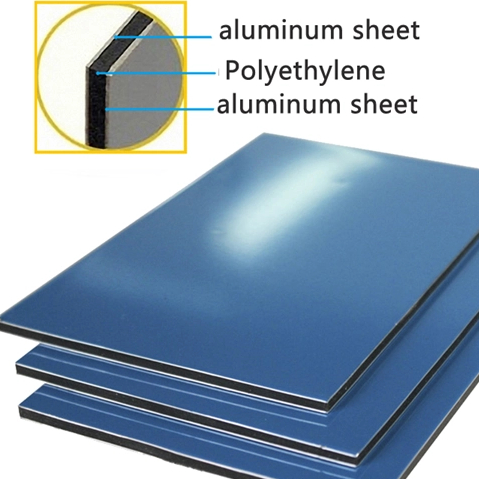
Understanding panel anatomy ensures superior specification. A standard panel features a precise three-layer composition. Manufacturers thermally bond two outer skins of high-strength aluminum alloy to an engineered core. This creates a highly rigid, lightweight sandwich structure. Specifiers must evaluate the core material carefully. Traditional Polyethylene (PE) cores burn easily under extreme heat. Most modern commercial building codes heavily restrict them. Instead, you must specify Fire-Retardant (FR) or A2 non-combustible mineral cores. These advanced cores utilize mineral compounds resisting ignition. They enhance life safety significantly during emergencies.
Surface finish chemistry often dictates the ultimate panel lifespan. Sub-standard coatings fail quickly under harsh ultraviolet sunlight. They chalk, fade, and peel prematurely. We highly recommend specifying FEVE fluoropolymer resins. They achieve exceptionally realistic gloss levels. They also deliver superior weatherability for any aluminum cladding wood finish. The manufacturing process utilizes a sophisticated multi-coat coil coating line. It starts by applying a specialized primer. Next comes a durable color base coat. Then, precision rollers apply a high-fidelity printed grain pattern. Finally, a clear protective topcoat seals the entire surface.
Grain pattern realism separates premium panels from cheap alternatives. Continuous roll-coated printing produces highly durable, photorealistic finishes. Manufacturers bake these layers directly into the metal. Some cheaper market options use repeating film laminates. These plastic films face severe UV degradation risks. They delaminate, peel, and fade rapidly in direct sunlight. Always specify roll-coated finishes for maximum exterior longevity. This ensures the facade retains its natural beauty for decades.
Commercial facades must meet strict, uncompromising fire regulations. The NFPA 285 standard dictates rigorous multi-story exterior non-bearing wall requirements. This test evaluates fire propagation characteristics. You must test the entire wall assembly. Inspectors do not just look at the exterior cladding material itself. The insulation, vapor barriers, air gaps, and panels must pass the burn test together. Changing one component invalidates the entire assembly compliance.
Specifiers should demand specific material testing certifications. Look for these crucial verifications before approving materials:
ASTM E84: Tests surface burning characteristics. It measures flame spread and smoke development indices.
ASTM E119: Evaluates fire tests of building construction. It ensures the structural integrity remains intact during a fire event.
EN 13501-1: A strict European standard. It grants the coveted A2-s1, d0 classification for non-combustible building materials.
Architects face immense professional liability regarding life safety. You must mitigate these risks proactively. Request full Technical Data Sheets (TDS) from every manufacturer. Demand authentic third-party laboratory test results. Verify the accreditation of the testing facility. This comprehensive documentation prevents costly compliance failures during final building inspections.
Proper installation engineering dictates long-term facade performance. Engineered panels integrate seamlessly into advanced rainscreen assemblies. You will frequently specify drained and back-ventilated (DBV) systems. Pressure-equalized rainscreens also work perfectly alongside these panels. These systems manage moisture ingress behind the wood finish cladding effectively. They allow the building envelope to breathe. This prevents trapped condensation and internal mold growth.
Fabrication realities highlight the composite material's distinct advantages. A high-quality wood grain aluminium sheet undergoes complex routing easily. V-groove routing allows fabricators to create perfectly crisp corners. You can achieve complex geometric shapes and deep returns. Natural timber shatters, warps, or splinters during similar machining attempts. Aluminum folds cleanly without compromising the exterior protective coating.
Thermal movement requires careful structural engineering. Aluminum expands and contracts predictably during seasonal temperature swings. You must calculate this thermal movement accurately across the facade. Specify appropriate joint widths to accommodate growth. Utilize engineered sliding fasteners rather than fixed screws. This critical step prevents panel buckling and unsightly oil-canning over time.
Implementation introduces several human-error risks. Installers sometimes fail to align grain directions across adjacent panels. This simple mistake ruins the visual illusion entirely. Improper site handling causes surface micro-abrasions. Construction crews must keep protective films applied until final installation. They must handle panel edges carefully to avoid denting the aluminum skins.
Streamlining the specification process requires standardized formatting. Integrate your systems using the industry-standard CSI MasterFormat. Place your wood grain aluminum composite panel systems firmly under Division 07. This vital division covers Thermal and Moisture Protection. Proper categorization ensures general contractors find the technical requirements easily during bidding.
Demand specific mandatory submittals before shortlisting any manufacturers. Require these items explicitly in your project documents:
Physical 12" x 12" samples demonstrating the full grain repeat and gloss level.
Project-specific engineering calculations proving wind load resistance (ASTM E330).
Comprehensive warranty documentation outlining specific gloss retention percentages and maximum chalking limits.
Certified mill reports verifying the origin and grade of the aluminum alloy.
Quality assurance establishes clear, measurable material baselines. You must dictate exact skin thickness and alloy grades. The chart below summarizes the standard commercial requirements.
Table: Quality Assurance Baselines for Commercial Cladding
Component | Minimum Commercial Standard | Optimal Recommendation |
|---|---|---|
Aluminum Skin Thickness | 0.4mm (0.016 inches) | 0.5mm (0.020 inches) |
Alloy Grade | 1100 Series | 3003 or 5005 Series |
Core Material | Fire-Retardant (FR) | A2 Non-Combustible Mineral |
Specifying exterior cladding remains a complex engineering decision. It often masquerades simply as an aesthetic one. True facade success demands a holistic, calculated approach. You must marry the right coating chemistry with rigorous fire testing protocols. Precision fabrication and thermal engineering round out the winning formula. Overlooking any single element invites structural failure.
Take proactive, decisive next steps on your upcoming projects. Request physical material samples immediately during schematic design. Review the complete wall assembly test data thoroughly with your fire consultant. Consult manufacturer technical representatives early during the design phase. They help optimize panel yields and ensure strict code compliance. Planning ahead guarantees a stunning, exceptionally durable building facade.
A: High-quality PVDF and FEVE fluorocarbon coatings boast exceptional longevity. They typically carry warranties spanning 15 to 20 years or more. These finishes adhere to rigorous AAMA 2605 standards. This ensures minimal fading, excellent UV resistance, and superior chalking limits over decades of direct sun exposure.
A: Coil coating processes imprint the grain continuously along the length of the metal roll. Fabricators must nest panels strategically during cutting. This yield optimization usually dictates grain orientation. You can specify vertical or horizontal alignment, but it may increase material waste and overall project costs.
A: Initial material costs often equal or slightly exceed premium natural timber. However, lifecycle costs drop significantly. Real wood demands repetitive sealing, staining, and rot repair. Engineered panels eliminate these ongoing maintenance expenses completely. This makes them highly economical over the entire building lifespan.
A: No. Maintenance remains extremely simple. We recommend washing the facade annually using low-pressure water and a mild detergent. You simply rinse away dirt and environmental residue. This contrasts sharply with natural wood. Wood requires harsh chemical strippers, mechanical sanding, and recurrent topical sealing to prevent decay.