Views: 0 Author: Site Editor Publish Time: 2026-10-06 Origin: Site
Scaling a visual identity across multiple locations demands absolute precision. Procurement managers and brand agencies face a complex challenge daily. You must balance high-fidelity brand representation against material longevity and cost-efficiency. Unfortunately, off-the-shelf panels often force unacceptable compromises. Standard inventory might ruin color accuracy or limit sheet sizing. This limitation inevitably leads to high material waste during fabrication. Off-the-shelf options also frequently lack the necessary environmental resilience for demanding outdoor locations. Transitioning to custom manufacturing solutions eliminates these headaches entirely. It allows for exact specification matching tailored specifically to your project requirements. This guide breaks down essential evaluation criteria for sourcing reliable materials. You will learn how to navigate supplier capabilities and avoid superficial marketing claims. By understanding the underlying material science, you can execute flawless brand rollouts globally.
Specifying the correct aluminum skin thickness and paint system is more critical to long-term ROI than the initial unit cost of the panel.
OEM manufacturing enables precise brand alignment through exact Pantone/RAL color matching and custom panel dimensions, significantly reducing installation waste.
Mitigating project risk requires auditing suppliers for verifiable quality control processes, particularly regarding core adhesion (preventing delamination) and UV resistance.
Choosing between standard PE cores and Fire-Rated (FR) cores must be dictated by local building codes and specific installation environments, not just budget.
Procurement teams often struggle when distinguishing between signage-grade materials and heavy-duty architectural cladding. Understanding this material baseline prevents costly specification errors. Standard signage ACP relies on specific aluminum skin thicknesses. Manufacturers typically optimize these skins between 0.12mm and 0.21mm. This precise thickness range ensures seamless routing, folding, and flatbed printing without compromising structural integrity.
The core material acts as the backbone of the panel. A polyethylene (PE) or fire-retardant (FR) core maintains panel rigidity over large spans. This sandwich construction prevents the panel from bowing under its own weight.
Absolute surface flatness remains a non-negotiable metric for commercial graphics. Direct-to-substrate digital printing requires flawless surfaces. Minor surface ripples or tension variations will distort printed graphics. Print heads operating millimeters above the substrate can easily strike an uneven panel, causing machinery damage and ruined batches.
Evaluating the cost-to-performance ratio requires strict discipline. Over-specifying ruins project budgets. Using heavy architectural panels featuring 0.50mm skins for simple retail signs wastes money and complicates installation. Conversely, under-specifying carries severe risks. Using ultra-thin 0.08mm skins for outdoor fascias leads to rapid deformation, skin cracking during fabrication, and early structural failure.
Table: Signage vs. Architectural Panel Specifications
Specification Metric | Signage-Grade Panel | Architectural-Grade Panel |
|---|---|---|
Typical Skin Thickness | 0.12mm – 0.21mm | 0.30mm – 0.50mm |
Primary Core Type | Standard PE (often acceptable) | Fire-Rated (FR) or A2 Non-Combustible |
Primary Fabrication | Direct printing, light routing, vinyl wrapping | Heavy structural folding, cassette fixing |
Ideal Application | Retail fascias, wayfinding, POS displays | High-rise building facades, exterior cladding |
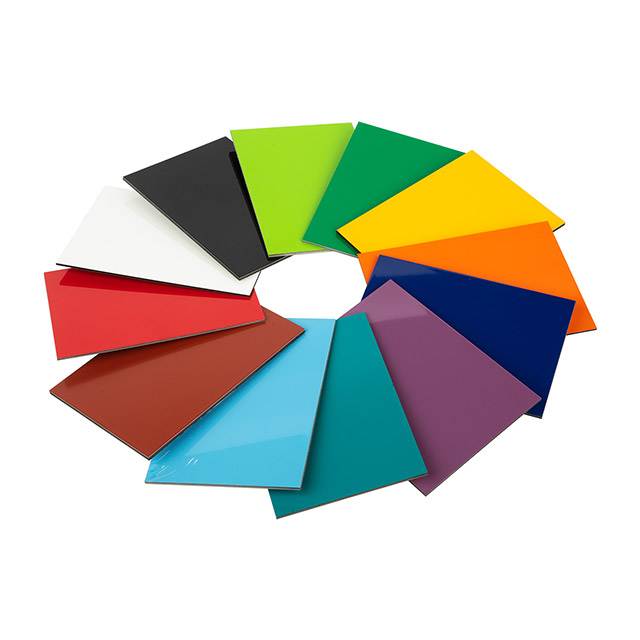
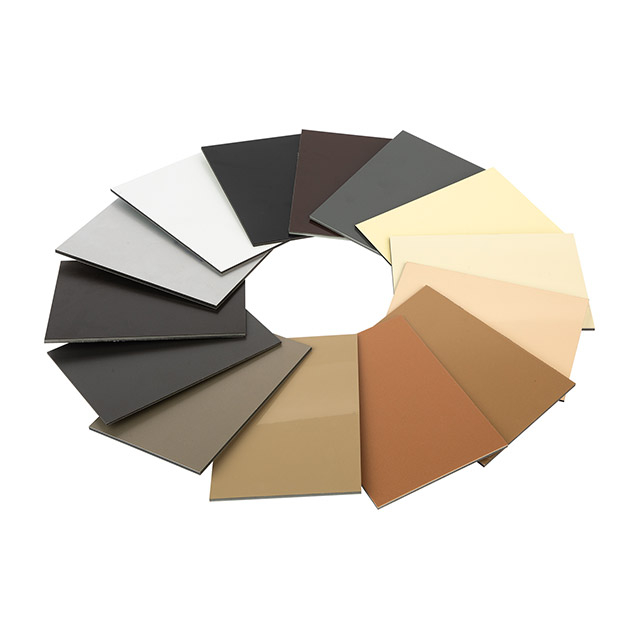
Standard color palettes rarely satisfy strict corporate visual identities. Partnering with an OEM signage aluminum composite panel manufacturer unlocks advanced customization. Continuous coil coating stands as the primary method for achieving color consistency.
Achieving exact Pantone, RAL, or corporate brand color matching requires rigorous factory protocols. Manufacturers utilize automated colorimeters to verify pigment mixtures before applying them to the aluminum coil. This continuous coating process guarantees uniformity across massive production batches. It prevents the subtle shade variations frequently seen when sourcing panels from multiple distinct suppliers.
To understand the manufacturing sequence, review these standard continuous coil coating steps:
Chemical Pre-treatment: The raw aluminum coil undergoes intense cleaning and chromating to ensure maximum paint adhesion.
Primer Application: Automated rollers apply a base primer coat, sealing the aluminum against moisture.
Topcoat Application: The custom-matched paint system (PE or PVDF) coats the surface evenly.
Thermal Curing: High-temperature ovens bake the coating, cross-linking the polymers for extreme durability.
Advanced coating technologies dictate panel lifespan. Polyester (PE) coatings offer vibrant colors and excellent flexibility. They serve as the ideal choice for indoor applications or short-term outdoor signage. However, Polyvinylidene Fluoride (PVDF) coatings remain mandatory for extreme UV exposure. PVDF systems resist harsh weather, ensuring long-term industrial signage retains its original gloss and color integrity.
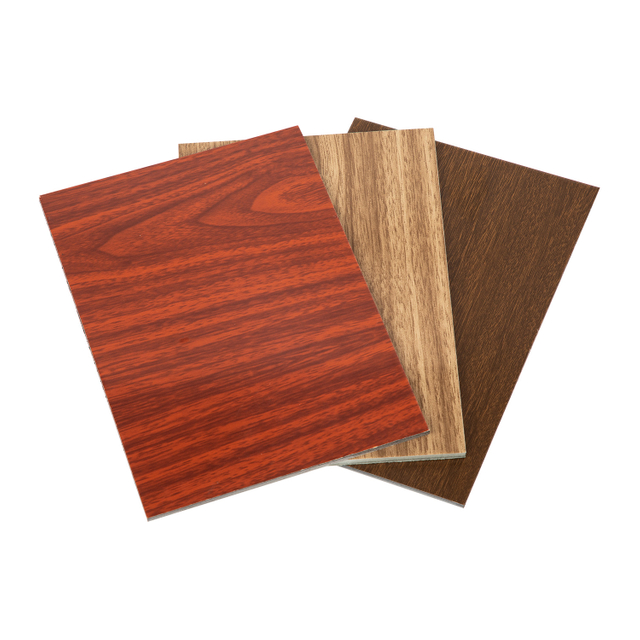
Beyond solid colors, specialty finishes elevate perceived brand value. Premium retail environments often demand sophisticated textures. You can specify brushed aluminum, high-gloss mirrors, metallic flakes, or even realistic wood-grain finishes. These options provide premium aesthetics without the weight or expense of natural materials.
Custom dimensions represent another critical OEM advantage. Standard 4x8 foot sheets often restrict design freedom. Specifying custom lengths and widths through a factory partner minimizes off-cut waste during fabrication. This optimization significantly improves shipping logistics, allowing you to maximize container space and reduce freight costs.
A successful signage rollout relies on matching the panel's physical properties to its final environment. High-traffic retail and commercial spaces require specific considerations. Aesthetic consistency takes precedence. Brand agencies expect uniform finishes across hundreds of franchise locations. Lightweight handling ensures rapid rollouts. Installers can easily maneuver thinner panels, speeding up project timelines. Furthermore, the material must demonstrate perfect compatibility with 3D illuminated lettering and pressure-sensitive vinyl wraps.
Industrial and long-term outdoor signage faces entirely different threats. You must establish strict criteria for surviving harsh environments.
Wind-Load Deflection: Large highway billboards or pylon signs require thicker aluminum skins to prevent flexing under heavy wind pressure.
Anti-Corrosion Treatments: Coastal installations demand specialized marine-grade coatings to prevent salt spray degradation.
Chemical Resistance: Panels installed near manufacturing plants or heavy traffic zones must resist atmospheric pollutants and acid rain.
Regulatory compliance heavily influences material selection. You must understand when Fire-Rated (FR) cores become legally mandated. Interior mall signage, subterranean transit hubs, and high-rise exterior branding typically require FR materials. Building inspectors will halt installations lacking proper documentation. Always demand and verify compliance certificates from your manufacturing partner before issuing purchase orders.
Even perfectly specified panels fail if manufacturing quality control falters. The delamination risk stands as the most severe threat. Delamination occurs when the adhesive film between the core and the aluminum skin fails. This separation causes the metal to bubble and peel away. You must screen suppliers for proper thermal bonding processes. Ask for technical data regarding their co-extrusion temperatures and adhesive film sourcing. High-quality macromolecular adhesive films prevent this catastrophic failure.
Coating degradation presents another harsh reality. All paints eventually experience chalking and color fading over time. Chalking creates a powdery residue on the panel surface as the paint resin breaks down under UV light. You must demand verifiable warranty terms. These warranties must be backed by accelerated weathering test data, such as ASTM standards for UV exposure.
Shipping and handling liabilities frequently destroy profit margins. OEM protective masking films play a crucial role here. The film must protect the surface from scratches during transit. However, it must also remove cleanly. Cheap masking films bake onto the panel during hot summer shipments, leaving a stubborn glue residue upon removal. Robust palletizing protocols prevent edge damage during ocean and over-the-road transit. Custom wooden crates with reinforced corners ensure panels arrive ready for fabrication.
Chart: Identifying Panel Defects and Causes
Defect Type | Visual Symptom | Root Manufacturing Cause |
|---|---|---|
Delamination | Skin bubbling or peeling off the core | Poor thermal bonding or cheap adhesive film |
Chalking | White powdery surface residue | Inferior paint resin breaking down under UV exposure |
Surface Rippling | Wavy reflection on glossy surfaces | Improper tensioning during coil rolling process |
Routing Failure | Aluminum cracking along folded V-grooves | Skin is too thin or uses brittle aluminum alloy |
Evaluating a potential manufacturing partner requires more than reviewing a glossy brochure. You must conduct thorough production capability audits. These audits separate tier-one manufacturers from superficial trading companies.
Ask these critical questions during your initial vendor screening:
What is your actual daily production line capacity for custom-colored panels?
Do you operate in-house continuous coil coating lines, or do you outsource painting?
What specific extrusion technology do you use for core bonding?
What are your guaranteed lead times during peak global shipping seasons?
Prototyping and sampling protect your investment. Never commit to high-volume orders based solely on a digital rendering. Outline a clear process for requesting run-of-production samples. You need physical panels to test flatbed printability. Fabricators must test routing behavior to ensure the aluminum does not crack on 90-degree folds. Physical samples also allow brand managers to verify color accuracy under different lighting conditions.
Negotiating Minimum Order Quantities (MOQs) requires a realistic framework. Factories need minimum volumes to justify stopping production lines for custom color changeovers. Standard inventory usually carries no MOQ. However, custom colors typically require larger commitments. Factor in inventory holding costs when planning your supply chain. Sometimes, ordering slightly above the MOQ and warehousing the excess proves cheaper than accepting standard colors that compromise the brand identity.
Successful procurement of signage materials demands strict alignment between brand requirements, environmental realities, and manufacturer capabilities. You cannot afford to treat these panels as generic commodities. Every specification choice directly impacts fabrication efficiency and long-term aesthetic durability.
Take immediate action to secure your supply chain. We recommend requesting technical data sheets (TDS) from prospective vendors today. Secure physical samples of various skin thicknesses to test on your own equipment. Finally, audit their compliance documentation to ensure they meet your local regulatory standards. Proactive evaluation guarantees your branding projects launch smoothly, accurately, and durably.
A: Standard industry thresholds for custom colors usually sit around 600 to 1000 square meters. Manufacturers require this volume based on continuous coil coating efficiency. Small runs waste massive amounts of paint during machine calibration. Meeting this MOQ significantly lowers your per-square-meter unit cost.
A: Yes, you can print directly onto an aluminum composite panel. However, you must specify a print-optimized coating. Standard finishes might repel ink. Factories apply a specialized, modified PE finish that guarantees optimal ink adhesion for UV flatbed printing systems.
A: Use 0.15mm skins for flat, wall-mounted graphics and simple hoarding boards. Reserve 0.21mm or thicker skins for structural signs requiring complex folding, routing, or V-grooving. The thicker skin prevents core exposure and stops the metal from cracking along sharp bends.
A: No. Standard PE cores usually suffice for ground-level or stand-alone commercial signage. Fire-Rated (FR) core requirements depend strictly on local building codes, installation height, and location. Exterior high-rise branding or signs attached directly to occupied buildings often mandate FR certification.