Views: 0 Author: Site Editor Publish Time: 2026-08-20 Origin: Site
Exterior cladding decisions carry zero margin for error regarding life safety and building compliance. Architects and developers face immense pressure to select facade materials resisting catastrophic failure. You simply cannot afford guesswork here. Navigating local building codes requires a precise understanding of how facade materials behave under thermal stress. A single miscalculation in material specification can expose your projects to severe legal liabilities. Furthermore, changing regulations constantly shift the baseline for what inspectors consider acceptable.
Selecting the right fireproof aluminum composite panel means moving beyond glossy marketing claims. We will evaluate specific core compositions, legal height restrictions, and verifiable testing standards. By the end of this guide, you will understand the critical differences between A2 and B1 grades. You will know exactly which rating your next project demands to ensure both safety and regulatory success.
B1 Grade: Acts as a flame retardant that "stops burning the moment the flame is removed," suitable for low-to-mid-rise structures.
A2 Grade: Categorized as non-combustible due to a high mineral core (typically 90%+), required for high-rise buildings and high-risk occupancies.
Compliance: Selection must be dictated by specific regional standards (e.g., EN 13501-1, ASTM E84) and strict building height thresholds.
Verification: Authentic fire-rated panels require third-party laboratory certifications to mitigate installation and liability risks.
Facade material failure represents a leading liability in commercial and residential development today. Regulatory bodies globally are aggressively tightening cladding codes following several high-profile urban fires. Authorities no longer accept vague assurances regarding building safety. They demand hard proof. You must prove every square meter of your exterior envelope meets stringent safety benchmarks.
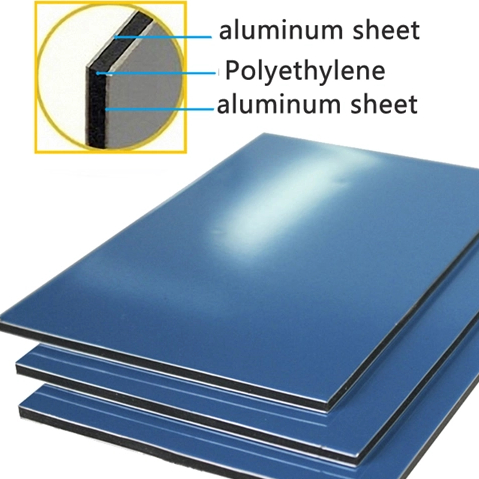
The core difference between traditional panels and modern safety materials lies entirely inside the panel structure. Standard architectural panels utilize a highly flammable polyethylene (PE) core. When exposed to high heat, a PE core melts, ignites, and spreads fire rapidly across a building's exterior. A true FR aluminum panel replaces this dangerous plastic with varying levels of inorganic, fire-retardant minerals. These minerals interrupt the combustion process, absorbing heat and releasing water vapor instead of toxic smoke.
Your ultimate success criteria should remain highly practical. The goal is selecting a panel preventing flame spread and minimizing toxic smoke generation. It must pass local fire marshal inspections effortlessly. However, you also want to avoid over-engineering the budget where laws do not legally require the absolute highest grade of non-combustible material. Understanding your specific ACP fire rating options helps you balance uncompromising safety against realistic project funding.
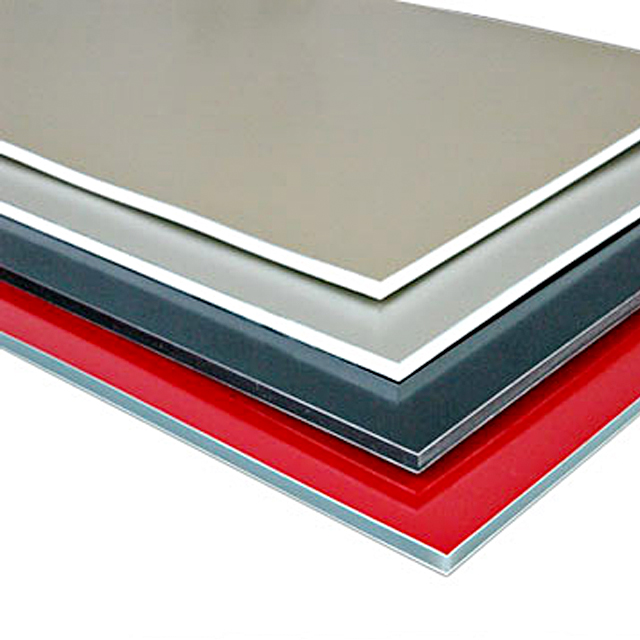
Understanding the chemical and behavioral differences between panel grades forms the foundation of smart material specification. A simple visual inspection reveals nothing. The true performance happens at the microscopic level inside the core.
The B1 classification identifies materials resisting initial ignition and slowing fire progression. Manufacturers engineer these panels specifically to handle localized fire exposure without accelerating the blaze.
Core Composition: A standard B1 fire resistant panel typically contains 55% to 70% flame-retardant inorganic materials. Manufacturers blend aluminum trihydroxide (ATH) with a smaller percentage of polymer binders.
Fire Behavior: This panel does not catch fire easily. Crucially, it stops burning the moment the external flame source is removed. It will not self-sustain a fire. If a localized trash fire flares up against a B1 wall, the panel will char but will not carry the fire up the facade.
Use Case: These panels provide a cost-effective solution for low-rise commercial buildings, specialized interior cladding, and large-scale signage. You should specify B1 only where local building codes explicitly permit combustible materials on exterior envelopes.
The A2 classification sits at the top tier of composite panel safety. Engineers designed this material to survive extreme thermal stress without contributing any fuel to the fire.
Core Composition: An A2 fireproof ACP contains 90% or more inorganic mineral materials. Factories densely pack the core with aluminum hydroxide or magnesium hydroxide (MDH), leaving almost zero room for combustible polymers.
Fire Behavior: A2 panels produce almost zero smoke under extreme heat. The core does not melt, does not drip flaming debris, and absolutely does not contribute to flashover. It essentially starves the fire of any potential fuel source.
Use Case: This grade is strictly mandatory for high-rise facades, hospitals, schools, and high-density urban environments. When human lives depend on evacuation time, A2 represents the only legally and ethically sound choice.
Technical Performance Summary: A2 vs B1 Panels
Performance Metric | B1 Grade Panel | A2 Grade Panel |
|---|---|---|
Mineral Core Content | 55% - 70% | 90% or higher |
Ignitability | Difficult to ignite | Non-combustible |
Self-Extinguishing | Yes (when flame is removed) | Yes (does not burn) |
Smoke Production | Moderate (s1 or s2) | Extremely low (s1) |
Typical Height Limit | Below 15 - 18 meters | Unlimited (High-rise approved) |
Choosing between these two robust materials requires a systematic evaluation of your specific project parameters. You cannot rely on preference alone. Building regulations dictate the path forward.
You must map your material choice directly to the structural height of your development. Modern international building codes draw a hard line in the sand regarding vertical fire spread. Standard regulations generally mandate A2 materials for any structure towering over 15 to 18 meters (approximately four to six stories). Why this specific height? Fire department extension ladders typically reach their operational maximum around this elevation. If a fire breaks out above this line, firefighters cannot easily extinguish exterior flames from the ground. Therefore, the building's skin must defend itself. Conversely, inspectors restrict B1 panels to lower thresholds where exterior intervention remains highly viable.
Building height only tells half the story. You must closely examine the occupancy profile. High-density environments or critical infrastructure completely override height-based allowances. If you design a two-story hospital, a single-story kindergarten, or an elder-care facility, the code defaults to A2 regardless of the low height. These structures house vulnerable populations requiring extended evacuation times. The building envelope cannot produce any toxic smoke or contribute to panic during an emergency.
Never evaluate panels based on generic marketing claims. You must judge them against internationally recognized scientific metrics. The European standard EN 13501-1 serves as the global gold standard for cladding fire safety.
A2-s1, d0: This rating means the panel is non-combustible (A2), produces little to no smoke (s1), and generates zero flaming droplets (d0). Flaming droplets cause secondary fires on lower floors, making the d0 rating critical.
B-s1, d0: This indicates a very limited contribution to fire (B), low smoke (s1), and no flaming droplets (d0).
Always align your specification with the exact alphanumeric code demanded by your local jurisdiction.
A2 panels carry a higher upfront material cost. Factories face immense complexity when manufacturing a panel containing 90% dense minerals while maintaining flexibility and smooth surface finishes. However, prioritizing a cheaper B1 panel on a borderline project introduces massive financial risk. If a building inspector rejects your B1 installation, tearing down and replacing the facade costs millions. Furthermore, installing A2 cladding often ensures significantly lower insurance premiums over the entire lifecycle of the building, offsetting the initial purchase price.
Specifying an outstanding material only solves the first piece of the puzzle. Real-world execution dictates ultimate safety. Many developers purchase premium panels only to fail their final inspections due to poor implementation strategies.
Even the highest-rated panel can fail catastrophically if contractors install it improperly. A facade system is a living assembly, not just a surface material. The cavity behind the cladding presents the greatest danger. If a fire breaches the exterior skin, the narrow gap between the panel and the building insulation acts like a chimney. Flames shoot rapidly upward, drawing in oxygen.
To prevent this, installation crews must integrate horizontal and vertical intumescent cavity fire barriers. Furthermore, framing systems must utilize appropriate metal sub-structures. Using non-compliant, combustible sealants in the panel joints will instantly compromise an otherwise perfectly specified A2 facade. The entire system must work in unison.
The global construction market unfortunately contains a massive influx of mislabeled panels. Unscrupulous suppliers frequently label standard PE panels or low-grade B1 panels as premium A2 materials. You face a severe disadvantage because visual inspection proves completely insufficient. You cannot determine core mineral content by simply looking at a trimmed edge. While FR cores generally appear white or light grey compared to the black PE core, manufacturers can easily dye standard plastics white to deceive buyers.
You must demand airtight proof before signing any purchase orders. Reputable manufacturers must provide recent, verifiable test reports from accredited third-party laboratories. Look for testing documentation from globally recognized authorities like SGS, Intertek, or TÜV.
Common Mistakes to Avoid:
Accepting a test report dated more than three years ago. Factory formulations change, and old reports may not reflect current batch quality.
Accepting a test report for a 4mm panel when you are purchasing a 3mm panel. Fire performance changes drastically based on thickness.
Failing to cross-reference the exact core density listed on the lab report with the product arriving on your job site.
Partnering with the right manufacturer eliminates the stress of regulatory compliance. You need a supplier who acts as a technical advisor, not just a materials broker. Follow this structured approach to vet potential manufacturing partners.
Execute Strict Document Verification: Demand original, traceable fire test certificates. The documentation must match the exact panel thickness, paint finish, and core density you plan to purchase. Do not accept generic "product family" certificates if your local building authority requires specific assembly testing.
Assess Quality Consistency: High mineral content panels require exceptional manufacturing precision. Evaluate the manufacturer's internal quality control procedures. Demand proof of active ISO 9001 certification. You need assurance that panel number 1,000 contains the exact same mineral mixture as panel number one.
Request Localized Demonstrations: Request physical material samples sent directly to your engineering team. While informal, conducting a localized burn-testing demonstration using a blowtorch quickly separates authentic FR panels from dangerous fakes.
Initiate an Engineering Review: Bring the supplier's technical documentation directly to your project’s fire engineer and local code official before purchasing. Getting pre-approval on the specific brand and grade prevents devastating delays during the final build phase.
Choosing between an A2 and a B1 composite panel goes far beyond aesthetic preferences or simple budget constraints. Code enforcement, structural height, and life safety liabilities dictate this critical decision entirely. Building owners face unprecedented scrutiny regarding exterior envelope safety, and taking shortcuts simply invites disaster.
We strongly recommend defaulting to A2 materials for any commercial project exceeding mid-rise thresholds. Furthermore, A2 remains the only responsible choice for housing vulnerable populations in schools and hospitals. You should utilize B1 panels solely for strict budget adherence on low-risk, low-rise projects where local laws explicitly permit their usage.
Do not navigate these complex regulations alone. Protect your project timeline and your occupants by verifying every specification. Contact our technical team today to request certified testing data, physical samples, and a project-specific cladding consultation tailored to your local building codes.
A: A1 identifies completely non-combustible materials like solid aluminum or stone. A2 panels feature negligible combustibility due to a 90%+ mineral core, preventing fire spread and smoke. B1 panels are flame-retardant; they resist ignition and self-extinguish when the flame is removed but still retain some combustible polymer binders.
A: Generally, no. Most modern international building codes explicitly ban B1 materials on structures exceeding specific heights, often 15 to 18 meters. Authorities enforce this strict limit to prevent rapid vertical fire spread beyond the reach of standard fire department extension ladders.
A: Visual inspection is highly unreliable. While genuine fire-retardant cores often appear white or light grey compared to a highly flammable black PE core, unscrupulous suppliers can dye plastics white. Laboratory certification and direct manufacturer traceability remain the only legally sound verification methods.
A: Yes, A2 panels possess higher initial manufacturing costs because densely packing the core with inorganic minerals requires advanced production technology. However, this upfront investment is rapidly offset by guaranteed regulatory compliance, eliminated tear-down risks, and substantially lower insurance liabilities.