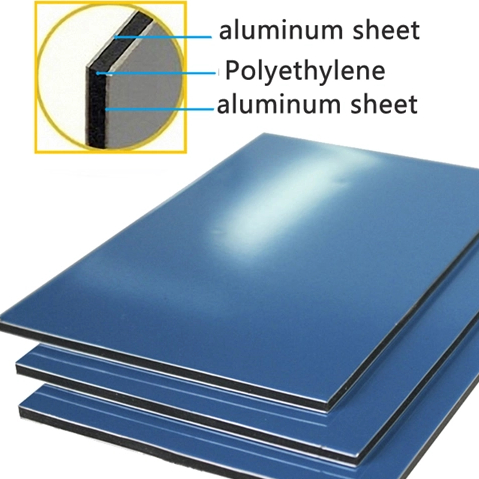
Views: 0 Author: Site Editor Publish Time: 2026-09-30 Origin: Site
Commercial construction projects live and die by supply chain predictability. When sourcing exterior cladding, miscalculating procurement timelines or volume requirements can easily lead to delayed installations. This misstep often triggers severe site bottlenecks and complex compliance failures. Sourcing a robust fireproof aluminum composite panel requires balancing exact project specifications against a manufacturer’s production limits. You must navigate strict Minimum Order Quantities (MOQ) and variable production lead times carefully. The stakes are incredibly high for commercial developers. Unplanned material shortages pause entire building phases and disrupt contractor schedules. This guide breaks down the core variables that dictate MOQ and lead times. We help procurement teams and specifiers build a realistic, risk-free purchasing schedule. You will learn how to anticipate hidden delays. You will also discover strategies to secure materials efficiently and keep your commercial exterior build perfectly on track.
Standardizing panel specifications (thickness, standard colors) can reduce MOQs by up to 50% and cut lead times significantly.
The production of a b1 fireproof fr aluminum composite panel requires specialized mineral cores, adding unique supply chain variables compared to standard PE panels.
Vetting your fireproof aluminum composite panel supplier for in-house core production vs. outsourced components is the most reliable way to accurately forecast delivery timelines.
International freight logistics and customs clearance for commercial exteriors must be factored into your baseline procurement checklist to avoid site-level delays.
Manufacturers enforce MOQ policies to offset massive factory setup costs. Continuous lamination lines run efficiently only at scale. Stopping these massive machines to switch aluminum coils or change core materials creates heavy material waste. Factory operators lose hours of production time during every changeover. You must understand these mechanical realities to plan your orders accurately.
Color choice acts as the largest single driver of your required order volume. Manufacturers keep standard color coils actively in stock. Standard silver, pure white, and basic metallic finishes usually require lower minimums. You can often secure these standard options at 500 to 1,000 square meters (SQM). The factory simply pulls a pre-painted coil from inventory and runs it through the lamination line.
Custom architectural colors change the equation entirely. Specific brand colors or unique textured finishes require custom coil coating. Paint suppliers enforce their own minimum batch sizes for custom pigments. This instantly drives your MOQ higher. Custom colors typically demand at least 1,000 to 3,000 SQM commitments. The factory must process an entire raw aluminum coil through the painting line before lamination begins.
Dimensional constraints also dictate volume thresholds. Non-standard widths trigger immediate factory minimums. Wider panels, such as those exceeding 1500mm, force the factory to source custom raw aluminum coils. Specifying standard dimensions remains the easiest strategy to keep your volume requirements highly manageable. Standard thicknesses (usually 4mm for exteriors) ensure you align with existing production schedules.
MOQ Impact Summary Chart
Specification Type | Typical MOQ Range (SQM) | Impact Level on Procurement |
|---|---|---|
Standard Color & Standard Width | 500 - 1,000 | Low - Easy to source quickly |
Custom Color Match | 1,000 - 3,000+ | High - Requires dedicated paint batches |
Non-Standard Width (>1500mm) | 2,000 - 4,000+ | Very High - Requires custom coil sourcing |
Planning delivery schedules requires breaking down the manufacturing process into isolated phases. Standard polyethylene (PE) cores process rapidly. However, manufacturing a b1 fireproof fr aluminum composite panel involves complex raw material sourcing. These specialized cores rely on specific mineral compounds like aluminum hydroxide. Global shortages or delayed curing times for these compounds establish your baseline production schedule.
Coil coating adds another distinct timeline phase. We allocate specific timeframes for matching exact project aesthetics. Below is the standard breakdown of time drivers you must anticipate:
Raw Material Staging (1 Week): Factories must procure and stage the mineral compounds necessary for fire-retardant cores. Shortages in raw aluminum hydroxide can stall this phase.
Color Matching and Coil Coating (2–3 Weeks): Custom colors require a lab matching phase. The factory sends a physical sample for your approval. Once approved, the actual coil coating process begins. You cannot skip this client sign-off.
Production and Lamination (1–2 Weeks): The actual continuous lamination process moves quickly. If the manufacturer has open line capacity and all materials staged, lamination takes only days.
Quality Assurance Testing (1 Week): Reputable factories conduct peel strength and fire-resistance batch tests before packing the final crates.
You must actively manage implementation risks during procurement. Beware of factories offering impossibly fast lead times for custom B1 or A2 panels. Improbable timelines often serve as a red flag. These factories might skip critical Quality Assurance (QA) steps. Even worse, they might substitute lower-grade core materials to rush the order out the door. Always verify standard timeline benchmarks against your quoted schedule.
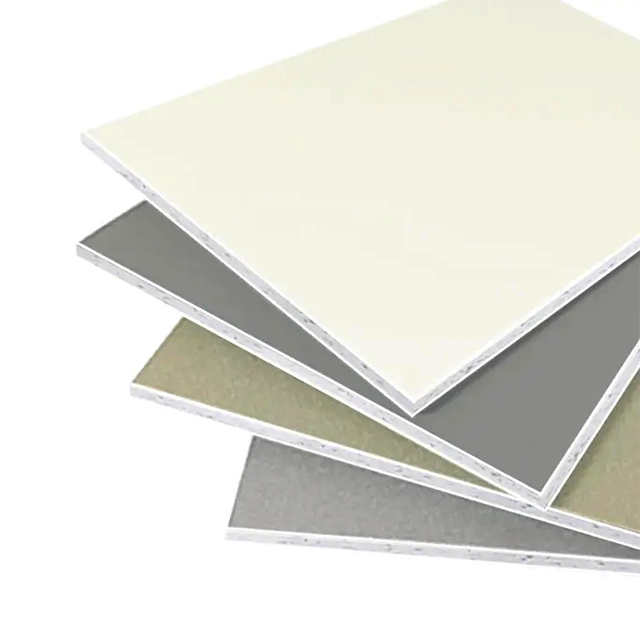
Architectural decisions directly impact factory floor realities. The exact fireproof aluminum composite panel specifications dictated by your design team heavily influence production feasibility. You must evaluate these features against desired timeline outcomes. A rigid specification on paper translates into specific manufacturing constraints.
The distinction between B1 and A2 fire classifications alters lead times significantly. B1 panels classify as "difficult to ignite." They serve as the standard choice for many mid-rise commercial buildings. B1 panels process relatively smoothly on modern lamination lines. They offer predictable, moderate lead times. You can scale B1 orders easily without overwhelming standard production machinery.
A2 panels classify as "non-combustible." They require a substantially different manufacturing approach. A2 cores contain up to 90% non-combustible mineral content. This incredibly dense composition makes them heavier and much harder to process. Factory machines must run at slower speeds to laminate A2 panels properly. This slower processing speed often subjects A2 orders to longer production queues.
Building authorities further complicate delivery timelines. Local municipalities often require fresh compliance documentation. You might need third-party testing reports specific to your production batch. Obtaining fresh EN 13501-1 or ASTM E84 certifications adds weeks to your timeline. You must plan for this administrative delay before dispatching panels to the job site.
Comparison of Fire Ratings and Production Logistics
Feature Matrix | B1 Classification (Difficult to Ignite) | A2 Classification (Non-Combustible) |
|---|---|---|
Core Composition | Moderate mineral content (~60-70%) | High mineral content (up to 90%) |
Processing Speed | Standard speed, highly efficient | Slower line speed to prevent core cracking |
Typical Lead Time | 3 - 5 Weeks | 5 - 8 Weeks |
Weight Profile | Manageable standard weight | Heavier, requires robust freight planning |
Procurement success relies heavily on your chosen manufacturing partner. Supply chain transparency is non-negotiable. A highly reliable fireproof aluminum composite panel supplier will transparently outline their sourcing methods. They will show you exactly where they source their FR cores and raw aluminum coils. You need to avoid middleman assemblers who lack control over raw material pipelines.
Fully integrated factories offer the highest degree of reliability. These facilities handle coil coating and core manufacturing entirely in-house. When a factory controls the paint line and the core extruder, they eliminate third-party delays. They offer the most accurate lead time predictions because they do not wait on external vendors.
You must actively evaluate a factory’s production capacity. Ask potential manufacturing partners about their daily output metrics. Inquire about the exact number of active lamination lines dedicated specifically to fire-rated panels. A facility with a single line will face severe bottlenecks if a machine breaks down. Redundancy in production lines guarantees your order will survive unexpected mechanical failures.
Global shipping realities define your ultimate delivery date. Buying from overseas manufacturing hubs, like China, introduces complex logistics. Ocean freight transit times add an immediate 3 to 6 weeks to your schedule. A trustworthy supplier helps you calculate the landed lead time. They do not just quote the ex-works or factory gate completion date. They factor in vessel booking, port congestion, and customs clearance.
Organizing a commercial procurement strategy requires strict shortlisting logic. Never base your final supplier decision purely on the lowest square-meter price. Base it on verifiable fire certifications, clear MOQ matrices, and highly realistic production timelines. You buy predictability alongside the physical panels.
We recommend following a structured 4-Step Procurement Framework to eliminate scheduling blind spots:
Phase 1 (Month 1 - Preparation): Finalize all architectural specs. Confirm exact color codes using standard industry systems (like RAL or Pantone). Request and receive physical lab samples for stakeholder approval.
Phase 2 (Month 1 to 2 - Commitment): Confirm the specific MOQ requirements with the factory. Issue the formal Purchase Order (PO). Approve the final Quality Assurance testing protocols for your specific batch.
Phase 3 (Month 2 to 3 - Manufacturing): Monitor vital production milestones. Request photographic proof when coil coating completes. Verify when lamination finishes. Confirm the packing method (usually sturdy wooden pallets) before dispatch.
Phase 4 (Month 3 to 4 - Logistics): Manage all freight booking details. Navigate customs clearance procedures proactively. Coordinate the final flatbed delivery to your active site.
You should consider a staggered delivery schedule for massive projects. Take this next-step action if your order significantly exceeds the required MOQ. Staggering shipments prevents on-site chaos if your job site lacks a secure footprint to store bulk materials. Phased deliveries keep installation teams supplied without creating dangerous site-level bottlenecks.
Align your architectural specifications with manufacturing realities to secure optimal MOQs and reliable lead times.
Prioritize standard widths and standard colors early in the design phase to keep minimum volume thresholds low.
Partner strictly with vertically integrated, transparent manufacturers who build raw material staging into their timeline estimates.
Calculate landed lead times including ocean freight and customs clearance, not just factory gate completion dates.
Implement a staggered delivery strategy for bulk orders to maintain safe, efficient job site storage.
A: Yes, occasionally. Some manufacturers allow you to piggyback on another client's order if they run the exact same color and specification. However, this restricts your schedule flexibility entirely. You must wait for the larger order to enter production, meaning you lose control over your own delivery timeline.
A: Yes. Processing mineral-filled fire-retardant cores requires slower lamination machinery speeds. The factory must maintain stricter temperature controls to bond the mineral core securely to the aluminum sheets. Standard polyethylene (PE) cores process much faster, making B1 inherently slower to produce.
A: We highly recommend placing your order 12 to 16 weeks prior to the required installation date. This generous window accounts for physical sampling, custom color coating, continuous lamination, international ocean freight, and potential unexpected customs clearance delays at the destination port.