Views: 0 Author: Site Editor Publish Time: 2026-10-01 Origin: Site
Commercial kitchen build-outs require careful planning. You need wall materials balancing strict health codes, fire safety, and operational durability. Builders often use Fiberglass Reinforced Plastic (FRP) in cold prep areas. However, high-heat cooking lines demand robust stainless steel. Project managers and facility owners face a critical choice here. They must specify this metal correctly to avoid future failures. Deciding between traditional solid stainless steel sheets and modern engineered composite panels impacts your project heavily. This choice dictates upfront material costs, installation timelines, and aesthetic performance. Poor material selection often leads to code violations. It can also cause costly tear-outs before opening day. This guide breaks down structural realities and compliance considerations. It helps you specify the right stainless steel kitchen wall cladding for your project. We explore the fundamental differences, aesthetic capabilities, and installation dynamics of each option. You will learn exactly when to deploy each material to ensure a compliant, durable facility.
Flatness & Aesthetics: Composite panels eliminate the "oil-canning" (waviness) effect common in large installations of solid steel sheets.
Labor vs. Material Cost: Solid sheets have lower raw material costs but demand higher specialized labor and wall prep; composite panels offset higher material costs with faster, lighter installation.
Compliance: Both solutions meet strict hygiene standards, but composites must be specified with A2 fire-rated cores to match the non-combustible profile required behind commercial cooking equipment.
Application: Solid sheets are best for raw, high-impact crash zones, whereas composites excel in large-scale rollouts and "open concept" kitchens requiring premium aesthetics.
Commercial kitchens operate under extreme conditions. They combine high heat, constant moisture, and heavy physical traffic. Any wall material installed here must meet a strict baseline. It must satisfy local health departments and fire marshals alike.
Sanitation drives most commercial kitchen design decisions. The FDA Food Code requires smooth, non-porous, and easily cleanable surfaces. Bacteria thrive in tiny crevices. Grease builds up rapidly on textured walls. You must install a surface resisting these threats. Stainless steel offers a naturally non-porous face. It prevents bacterial growth entirely when cleaned properly. Food inspectors look for seamless transitions and easily washable zones.
Fire safety introduces another major constraint. Many contractors try placing standard FRP panels behind cooking lines to save money. This mistake causes immediate inspection failures. Standard FRP melts or catches fire near open flames. Fire marshals strictly enforce NFPA 96 standards. These standards require non-combustible materials directly behind fryers, ranges, and broilers. You must use metal or specialized fire-rated assemblies in these critical hot zones.
Kitchens endure daily physical abuse. Staff move heavy rolling carts constantly. Ingredient bins crash into lower walls. Equipment shifts during deep cleaning shifts. Drywall shatters under these impacts. Even standard plastic panels crack when hit hard enough. Facility owners rely on robust commercial kitchen stainless steel wall panels to survive this abuse. Metal provides the necessary impact resistance. It protects the structural walls behind the cooking line.
Common Mistake: Do not use standard drywall behind metal cladding in splash zones. Always use moisture-resistant backing boards to prevent hidden mold.

Solid metal sheets represent the legacy solution. Builders have trusted them for decades. They offer straightforward protection without complex engineering.
You will typically see solid sheets specified in 304 or 316 grade alloys. Grade 304 handles most standard indoor kitchen environments perfectly. Grade 316 adds molybdenum. This addition resists pitting from high-salt or highly acidic food production. Thickness usually ranges from 18 to 22 gauge. A #4 brushed finish is standard. It hides minor scratches while reflecting light well.
Solid sheets bring several undeniable benefits to a rough kitchen environment.
100% Non-Combustible: A solid piece of steel contains no core material. It poses absolutely zero risk of core degradation under high heat. Fire inspectors pass solid steel without hesitation.
High Localized Impact Resistance: Solid metal takes a beating. A direct hit might dent the steel. However, it will rarely puncture through to the drywall.
No Edge-Banding Required: Installers do not need special trims for raw edges. They can simply hem the edges or overlap the sheets directly.
Despite their legacy status, solid sheets present major challenges during installation.
The "Oil Canning" Effect: This is the biggest aesthetic drawback. Thin solid sheets warp easily. When installers glue them to imperfect drywall, the metal conforms to every bump. This creates ripples across the surface. We call this "oil canning." It produces distorted reflections. It makes a brand-new kitchen look poorly built.
Weight & Handling: Solid steel is incredibly heavy. Moving 4x8 foot sheets requires multiple workers. Applying heavy-duty construction adhesive while wrestling the sheet into place drives up labor costs significantly. The physical difficulty often leads to misaligned seams.
Modern building technologies offer a smarter way to handle metal. Engineered panels solve the physical limitations of solid steel. They provide a high-end finish for modern culinary spaces.
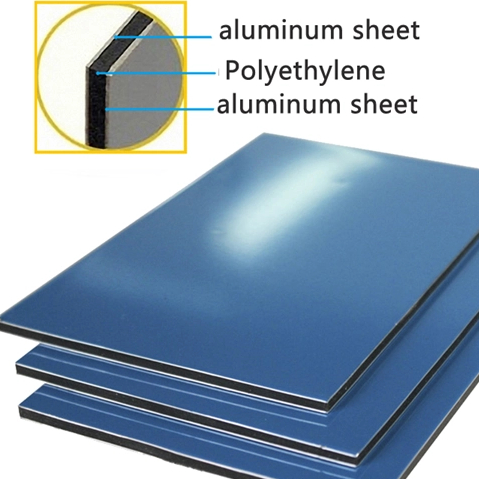
A stainless steel composite wall panel features a sandwich structure. Manufacturers bond two ultra-thin layers of stainless steel to an engineered inner core. The total thickness usually reaches 4mm. The outer face uses the same 304 or 316 grade steel. It looks identical to a solid sheet from the front.
Composite engineering changes how the material behaves on the wall. It delivers benefits solid steel simply cannot match.
Extreme Rigidity & Flatness: The engineered core stabilizes the outer metal skins. This solves the oil-canning problem entirely. You get a perfectly flat, premium finish. The wall acts like a rigid mirror rather than a wavy funhouse glass.
Lightweight Handling: Removing the bulk of the heavy steel reduces the dead load dramatically. One worker can easily carry and position a large panel. This makes site handling much safer and faster.
Superior Workability: Installers can rout, fold, and cut these panels on-site. They use standard composite tooling. This speeds up the installation of restaurant stainless steel wall panels around complex ductwork and outlets.
Composites require careful specification. You cannot buy just any panel off the shelf for a kitchen.
Core Fire Ratings: This is the most critical risk. Standard composite panels use polyethylene (PE) cores. PE cores are highly flammable. You must verify and specify an A2 fire-rated mineral core. Commercial kitchens demand this compliance to pass local fire codes.
Edge Treatment: Unlike solid sheets, composites have an exposed inner core at the cut edges. You must seal this core. Installers use specific stainless steel trims, extrusions, or routing-and-folding techniques. Proper edge treatment ensures hygiene and seals out moisture.
Best Practice: Always request the manufacturer's ASTM E84 or EN 13501-1 fire test reports. Keep these documents on site for the fire marshal.
Choosing between a stainless steel panel vs sheet requires comparing features directly. Buyers must weigh installation dynamics against aesthetic goals.
Solid sheets demand perfect substrate preparation. If your drywall is wavy, your solid steel will be wavy. You must float and level the walls perfectly. Installers use heavy-duty construction adhesives. They also need specialized suction-cup handling tools. The process is slow and labor-intensive.
Composite panels tolerate minor wall imperfections. Their inherent rigidity bridges small dips in the substrate. Installers mount them rapidly. They use mechanical fasteners hidden by trims, or standard panel adhesive systems. The lightweight nature allows a smaller crew to cover more square footage daily.
Cleaning efficiency directly affects kitchen operations. A perfectly flat composite surface makes wide-area wipe-downs incredibly fast. Squeegees glide smoothly over the rigid face. Conversely, a wavy solid sheet traps grease in its shallow divots. Staff must scrub harder to clean uneven sections. Aesthetically, composites win in open-concept kitchens. Customers looking into the kitchen see a sleek, premium, flat surface.
You must break down the upfront math correctly. Frame your comparison as Material Cost plus Prep Cost plus Labor Time. Solid sheets have lower raw material costs per square foot. However, they demand higher specialized labor rates. They also require expensive wall leveling before installation.
When analyzing a stainless steel composite panel vs solid stainless steel sheet, the upfront dynamic flips. Composites cost more at the supply house. Yet, this higher material cost is often neutralized rapidly. You save money through reduced labor hours. You skip the tedious wall-leveling steps entirely. A smaller crew finishes the job faster.
Material and Installation Comparison Matrix
Feature / Metric | Solid Stainless Steel Sheet | Stainless Steel Composite Panel |
|---|---|---|
Surface Flatness | Prone to "oil-canning" and warping | Extremely rigid, perfectly flat |
Weight | Very heavy, requires multiple workers | Lightweight, easily handled by one person |
Substrate Prep Needed | High (Requires perfectly flat walls) | Low (Bridges minor imperfections) |
Fire Compliance | Inherently 100% non-combustible | Requires specific A2 mineral core specification |
Edge Finishing | Can be hemmed or overlapped directly | Requires specialized H-channels or J-trims |
Upfront Material Cost | Lower | Higher |
Upfront Labor Cost | Higher (Slower installation) | Lower (Faster, easier installation) |
Procurement and facility managers must match the material to the specific environment. There is no universal winner. You must evaluate your distinct operational needs.
Your material budgets are heavily constrained, but you have access to cheap internal labor.
The application area is very small. For example, you only need a single backsplash directly behind a deep fryer.
The environment guarantees extreme, direct physical impacts. If forklifts or heavy metal meat-carts constantly crash into the walls, solid steel survives better.
You are building an open-concept kitchen. Customer-facing aesthetics and perfect flatness are critical to your brand image.
You are managing large-scale commercial rollouts. Standardizing installation time across multiple locations is vital for your schedule.
You are executing a retrofit project. The existing walls remain structurally sound but look aesthetically uneven. Composites cover these flaws beautifully.
Do not order materials blindly based on standard blueprints. Follow a strict verification process. First, request material spec sheets from your supplier. Look specifically for testing data proving the fire rating of the core. Second, order small physical samples of the panels. Have your installation team test their workability. Let them cut and route the samples. Finally, present the spec sheets to your local fire marshal before placing the bulk order. Early approval prevents expensive tear-outs later.
Selecting wall materials shapes the future of your commercial kitchen. The choice between a solid sheet and a composite panel is not about finding a universally superior product. Instead, it is about matching material behavior to your specific constraints. You must balance labor availability, aesthetic desires, and localized code requirements. Solid sheets provide brute-force durability for high-impact zones. Composite panels offer engineered flatness, rapid installation, and premium aesthetics for modern culinary spaces. Regardless of your final choice, always work with certified installers. Verify all A2 core fire ratings and local health codes prior to procurement. Smart specification upfront guarantees a safe, beautiful, and highly functional kitchen for years.
A: No. Commercial fire codes strictly prohibit polyethylene (PE) cores in high-heat zones. NFPA 96 requires non-combustible surfaces behind cooking equipment. You must specify composite panels with an A2 fire-rated mineral core to ensure safety and pass local fire marshal inspections.
A: Yes, generally. While the surface material is identical (usually 304 or 316 grade stainless), the structural behavior differs. Composites offer superior, rigid flatness. This prevents the wavy "oil-canning" effect found in solid sheets. A perfectly flat surface makes wide-area wipe-downs faster and eliminates shallow divots that trap grease.
A: Installers must cover the exposed inner core to maintain hygiene. They use specialized stainless steel extrusions like H-channels for seams and J-trims for exposed borders. Alternatively, skilled installers use routing-and-folding techniques to bend the front metal face over the core, creating a seamless edge.
A: It depends on the alloy and maintenance. Grade 304 stainless resists standard kitchen moisture and prevents most corrosion. However, if your facility processes highly acidic foods or uses heavy salts, you should upgrade to grade 316. Grade 316 contains molybdenum, which actively prevents chemical pitting and rust.