Views: 0 Author: Site Editor Publish Time: 2026-08-26 Origin: Site
Drafting architectural facades demands absolute precision. Vague material specifications inevitably lead to expensive project delays. They cause code compliance failures and aesthetic disasters like "oil-canning" or jarring metallic color variations across your building. These problems arise when buyers leave crucial technical parameters up to interpretation. A rigorous specification sheet acts as your first line of defense. It guarantees accurate quoting, ensures consistent panel performance, and enforces clear accountability from fabricators and suppliers. You need to know exactly what to demand before authorizing a purchase order. In this guide, we define the exact dimensional, structural, coating, and compliance parameters you need. You will learn how to confidently procure and install high-quality composite materials. We will cover core selection, coating chemistry, dimensional tolerances, and supplier vetting strategies.
Every successful facade project starts with establishing baseline material dimensions. You must select the overall material depth carefully. Choosing the wrong overall dimension compromises structural integrity and installation safety.
Manufacturers produce composite sheets in several standard parameters. You will primarily encounter 3mm, 4mm, and 6mm options in the marketplace. Each depth serves a very specific architectural or commercial purpose. You cannot interchange them without risking severe performance failures.
The interior core material dictates your compliance with regional building safety regulations. You must specify the core chemistry explicitly on your purchase orders.
First, consider the standard pe aluminum composite panel. We define this as a sheet utilizing a standard LDPE (Low-Density Polyethylene) core. Position this strictly as a cost-effective solution for single-story buildings, interior fit-outs, or temporary signage. You should only use LDPE cores where stringent fire codes do not apply. They melt and contribute to flame spread under high heat.
Conversely, you must specify an FR (Fire-Retardant) core for multi-story exterior architectural cladding. FR cores utilize mineral-filled chemistry. They actively resist combustion and prevent rapid flame spread across building facades. Require your fabricators to supply Class B1 (fire retardant) or Class A2 (non-combustible) cores. These specific ratings ensure your project meets strict commercial building codes globally.
Common Mistake: Never accept a generic "composite core" designation on a quote. Always demand the chemical makeup and specific fire rating classification.
The total material depth only tells half the story. The thickness of the outer aluminum layers dictates the true mechanical performance of the product. You must align this gauge to your specific structural demands.
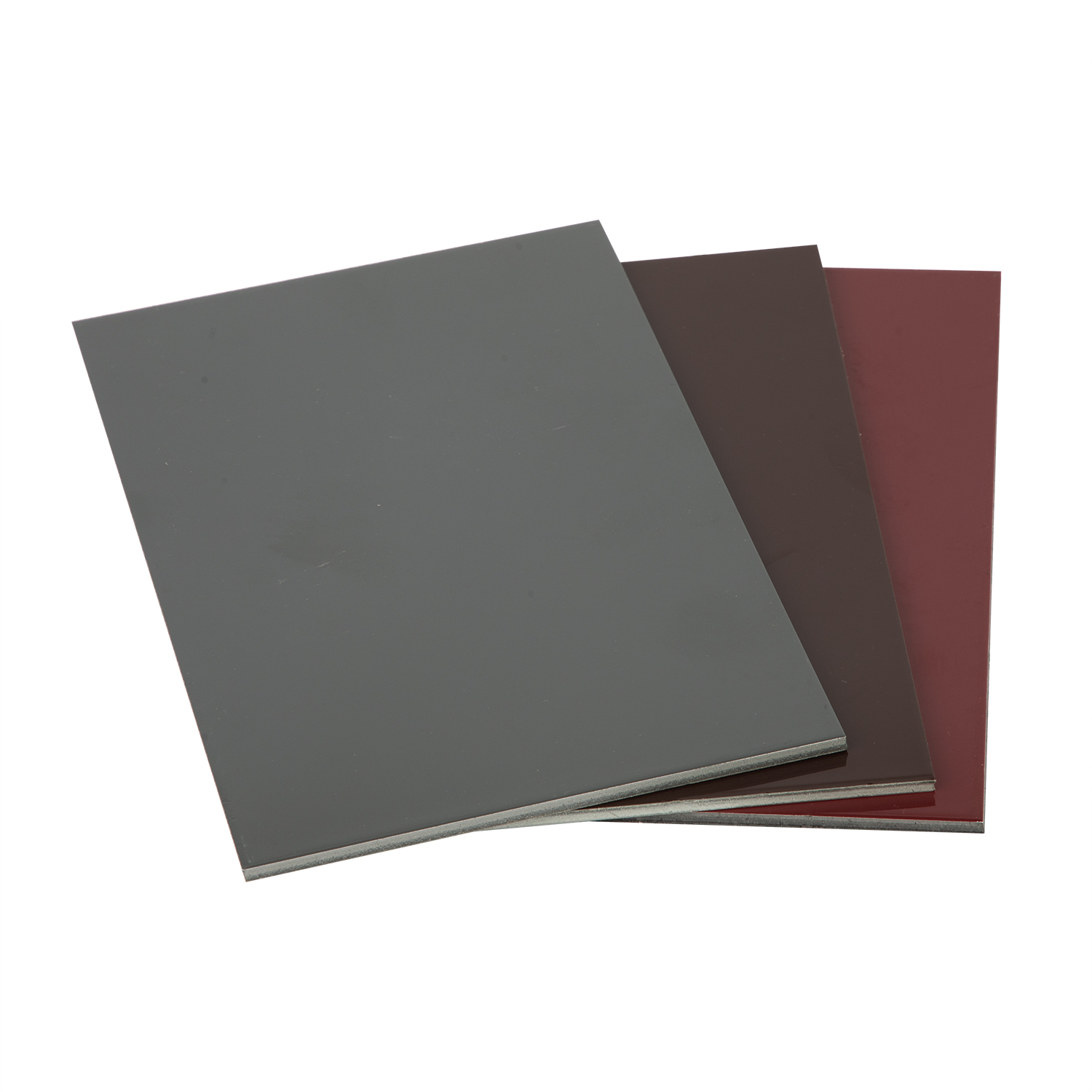
Outer aluminum skins act as the structural exoskeleton. They provide the necessary rigidity to keep surfaces flat. Thicker skins enhance routing capabilities significantly. They allow fabricators to cut clean V-grooves for folding without tearing the metal. Furthermore, thicker skins provide crucial resistance to blunt force denting during transit and installation.
We rely on standardized thickness matrices to prevent material failure. If you use skins that are too thin for large exterior spans, you will experience "oil-canning." This refers to visible, unsightly waviness caused by wind loads and thermal expansion. You must consult specific gauge parameters for different use cases.
| Skin Gauge (mm) | Application Category | Performance Characteristics |
|---|---|---|
| 0.12mm – 0.21mm | Signage & Interior Displays | Suitable only for flat, short-term applications. Highly susceptible to denting. Cannot withstand exterior wind loads. |
| 0.30mm | Standard Interior Wall Cladding | The reliable baseline for interior walls and basic channel letter backing. Provides moderate rigidity for indoor environments. |
| 0.40mm – 0.50mm | Exterior Architectural Facades | The mandatory specification for exteriors. Prevents oil-canning under thermal expansion. Withstands complex routing and folding. |
Best Practice: Always specify a minimum 0.50mm skin gauge for any exterior cassette panel exceeding two square meters in surface area. This ensures long-term flatness under extreme temperature fluctuations.
A brilliant metallic facade quickly becomes a liability if the paint chemistry fails. You must dictate exact coating standards to maintain visual consistency over decades of sun exposure.
Exterior environments punish painted surfaces with relentless UV radiation. You must specify PVDF (Fluorocarbon) or FEVE coatings for any exterior metallic aluminum composite panel. These advanced chemistries provide exceptional UV resistance. They ensure long-term color retention and typically offer proven 15 to 20-year lifespans. They resist chalking, fading, and chemical weathering.
Conversely, you should strictly limit PE (Polyester) coatings to interior use. Polyester paints break down rapidly under direct sunlight. While they cost less upfront, using them outdoors guarantees premature color degradation. Always verify the resin percentage in PVDF coatings. Industry standards require a minimum of 70% Kynar 500 or Hylar 5000 resin for optimal durability.
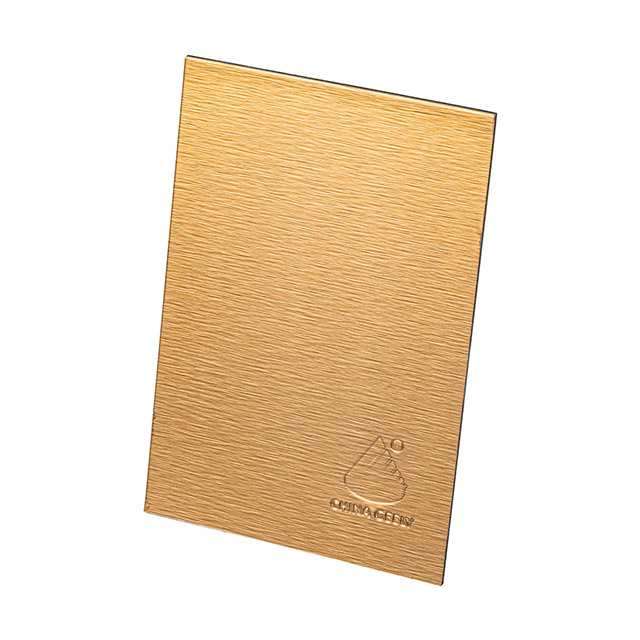
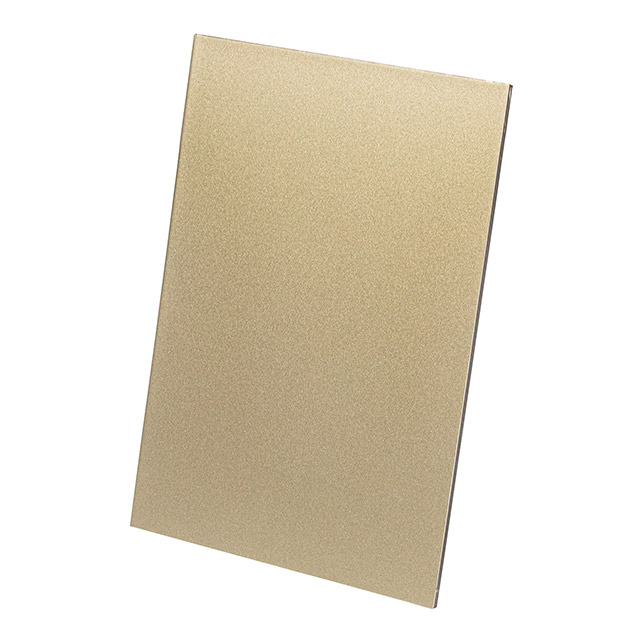
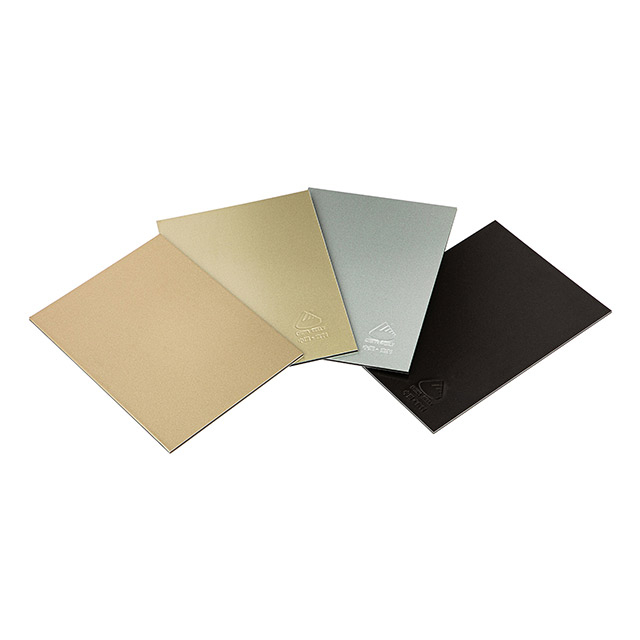
Metallic finishes contain microscopic reflective flakes suspended within the paint. These flakes align in a specific direction as the coil runs through the painting line. They reflect light differently depending on your viewing angle.
You face a severe risk of "checkerboarding" if installers ignore this directionality. Checkerboarding occurs when adjacent panels reflect light differently, making identical paint colors look vastly different. You must mandate directional arrows on the protective peel-off film. Your specification document must require installers to orient all panels identically according to these arrows.
Metallic finishes demand precise application metrics to achieve their signature depth. Specify an acceptable gloss range in your procurement documents. Standard metallics typically require a 25% to 40% gloss level to balance reflectivity and glare reduction.
Furthermore, you must mandate a minimum total dry film thickness. A proper multi-coat PVDF system requires at least 25 microns of dry film thickness. This ensures adequate coverage over the metallic flakes and provides a robust clear coat for weather protection.
Even premium materials fail if their manufacturing dimensions vary wildly. You must define strict boundaries for dimensional deviations. These boundaries protect you from installation gaps and alignment issues.
Establish verifiable numbers for your metallic aluminum composite panel specifications. Do not accept vague guarantees of "high precision." Force manufacturers to agree to strict numerical limits before production begins.
| Parameter | Maximum Acceptable Deviation | Impact on Installation |
|---|---|---|
| Width | ±2.0mm | Prevents vertical joint misalignment between cassettes. |
| Length | ±4.0mm | Ensures horizontal reveal consistency across long spans. |
| Thickness | ±0.2mm | Maintains flush surfaces at panel intersections. |
| Bow / Maximum Deflection | ≤ 0.5% of length/width | Prevents visible bulging or concavity on the building facade. |
Common Mistake: Failing to specify bow deflection limits often results in wavy facades, even if the aluminum skins are thick enough. Enforce the 0.5% maximum rigorously.
You must require formal documentation for physical performance. Demand certified test reports for peel strength. This metric measures delamination resistance, proving the aluminum skins will not separate from the core under stress.
Additionally, require relevant regional fire testing certifications. Do not accept in-house testing letters. Demand reports from accredited third-party laboratories. For projects in the United States, require ASTM E84 compliance. For European markets, demand EN 13501-1 certification. These documents legally validate the safety of your specified materials.
Technical specifications mean nothing if the factory cannot execute them reliably. Evaluating your manufacturing partner requires systemic scrutiny of their production controls and logistical capabilities.
Metallic paint remains highly susceptible to batch-to-batch variation. Even minor changes in temperature during coating alter the final appearance. You must require suppliers to produce your entire project volume from a single master coil.
If project size prevents a single run, you must demand a strict Delta E (ΔE) color tolerance guarantee. Delta E measures the visual difference between two colors. Require a ΔE of less than 1.5 for metallic finishes to ensure human eyes cannot detect variations between different production batches.
A reliable metallic aluminum composite panel supplier optimizes their supply chain to protect your investment. Assess them using these critical logistical criteria:
Manufacturers often use confusing legal language in warranty documents. You must distinguish between a panel warranty and a coating warranty. A panel warranty guarantees structural integrity, preventing delamination of the skins from the core.
A coating warranty guarantees visual performance, preventing excessive chalking or fading. For metallic finishes, ensure the warranty explicitly covers metallic flake oxidation and clear-coat failure. Read the fine print to confirm what environmental conditions void the coverage.
An effective specification sheet serves as an insurance policy. It protects you from substandard materials and negligent manufacturing. You must enforce strict parameters for total thickness, skin gauge, core rating, and paint chemistry. If a factory quote omits any of these critical details, you should disqualify it immediately.
To move forward successfully, follow these actionable next steps. First, finalize your exact visual requirements by requesting physical metallic finish samples. Do not rely on digital color charts. Second, compile your structured specification sheet using the parameters discussed above. Finally, send this comprehensive document to two or three vetted suppliers for parallel quoting. This strategy guarantees you receive apples-to-apples pricing for high-performance architectural materials.
A: Solid aluminum plates consist entirely of metal, making them heavier and more expensive. A composite panel uses two thin aluminum skins bonded to a lighter core. This composite structure provides a superior flatness-to-weight ratio. It delivers high rigidity at a fraction of the cost and weight of solid metal plates.
A: We heavily discourage using PE (polyethylene) cores for multi-story commercial exteriors. Standard PE cores melt and spread fire rapidly under high heat. While they might survive weather conditions, they routinely fail modern fire safety codes. You must use FR (fire-retardant) cores for commercial building exteriors.
A: This optical illusion results from incorrect metallic flake orientation. Metallic paints contain reflective flakes that align in one direction during manufacturing. If an installer rotates a panel 90 or 180 degrees, light reflects differently. You must follow the directional arrows printed on the protective film during installation.
A: You should expect a realistic baseline of 4 to 8 weeks for custom metallic orders. This timeline depends heavily on custom color-matching requirements and raw master coil availability. Standard colors often ship faster, but unique metallic finishes require specialized paint mixing and dedicated production line scheduling.