Views: 0 Author: Site Editor Publish Time: 2026-08-30 Origin: Site
Technical Data Sheets (TDS) for building materials often blend factual testing and aggressive marketing claims. This widespread practice makes supplier evaluation a high-risk compliance challenge for modern construction professionals. Navigating these complex documents requires sharp scrutiny and deep material knowledge. Relying on unverified specifications for an aluminum composite panel can lead to catastrophic fire compliance failures. Such critical oversights also cause premature weathering or structural rejection by strict building inspectors. You simply cannot afford to accept basic marketing sheets at face value when human lives and massive budgets are involved. Our guide provides a skeptical, evidence-based framework specifically designed for architects, specifiers, and procurement teams. We will help you dissect a TDS accurately and confidently. You will learn exactly how to separate verified performance metrics from standard industry claims.
The core layer dictates the fire behavior of your cladding. You must understand the three main core types to ensure code compliance. Each type serves very strict use cases.
Polyethylene (PE) cores consist entirely of combustible plastic. You should specify a pe aluminum composite panel strictly for low-rise structures, corporate signage, or specific non-architectural applications. Building codes globally ban PE cores on multi-story facades. They ignite easily. They also spread flames rapidly across a building envelope.
Modern commercial exteriors require Fire Retardant (FR) or Non-Combustible (A2) cores. These cores rely on heavy mineral-filled compositions. Manufacturers blend inorganic materials like aluminum trihydroxide (ATH) or magnesium hydroxide (MDH) into the core matrix. Aluminum trihydroxide undergoes an endothermic reaction under intense heat. It absorbs massive amounts of heat energy and releases water vapor. This physical process cools the panel surface. It actively dilutes combustible gases surrounding the fire source.
Spec inflation remains a massive industry problem. Substandard suppliers often claim FR compliance but use high-percentage plastic binders. They dilute the expensive fire-retardant minerals simply to cut production costs.
You must demand exact formulation percentages. A true FR core contains at least 70% non-combustible minerals. An A2 core pushes this critical threshold above 90%. Look for these specific percentages clearly listed in the aluminum composite panel specifications. Never accept vague marketing terms like "fire-resistant" without demanding the exact mineral ratio.
Changing core materials directly impacts fabrication logic. Routing and folding behavior changes drastically between PE and A2 cores. Mineral-heavy A2 cores lack the flexibility of pure plastic. They are distinctly brittle.
Fabricators use V-grooving techniques to fold panels around building corners. If a fabricator uses standard PE router bits on an A2 core, they will shatter the mineral compound. You must ensure your fabrication partners understand these distinct tooling requirements. They need specialized diamond-tipped routing tools. Always highlight the need to verify core machinability directly alongside the fabrication team before site installation begins.
Cladding panels must resist intense environmental forces. Relying solely on total panel thickness creates dangerous structural vulnerabilities for your project.
Many buyers fall into a common industry trap. They buy a standard 4mm panel for a high-rise project. Later, they discover the panel features a mere 0.20mm aluminum skin. The project actually required a 0.50mm skin to prevent severe wind-load deflection.
Total thickness simply dictates the panel volume. Skin thickness provides the actual structural rigidity. Thin skins warp under standard thermal expansion. They also oil-can under heavy wind pressure. When a thin skin deflects, it stresses the perimeter silicone sealants. Eventually, the sealant joints fail completely. This failure allows severe water ingress into the building envelope. You must isolate and verify the skin dimension on every TDS.
Aluminum alloys dictate tensile strength and corrosion resistance. The 3000 series serves as the standard for general architecture. Alloy 3003 offers excellent workability. It provides sufficient strength for standard commercial facades.
High-stress or marine environments demand the 5000 series. Alloy 5005 provides superior tensile strength. It also resists saltwater corrosion exceptionally well. You should upgrade to 5005 for coastal buildings or high-altitude towers experiencing severe wind shear.
Do not accept generic alloy descriptions. You need hard mechanical data.
Require mechanical property test reports based on standardized methodologies. Request ASTM E330 test results. This standard proves structural performance under uniform static air pressure.
Table 1: Aluminum Alloy and Skin Thickness Recommendations
| Application Type | Recommended Alloy | Minimum Skin Thickness | Primary Structural Concern |
|---|---|---|---|
| Low-Rise / Signage | 1100 or 3003 | 0.20mm - 0.30mm | Basic panel rigidity |
| Standard Commercial | 3003 | 0.40mm - 0.50mm | Thermal expansion limits |
| High-Rise / Marine | 5005 | 0.50mm+ | Wind shear and salt corrosion |
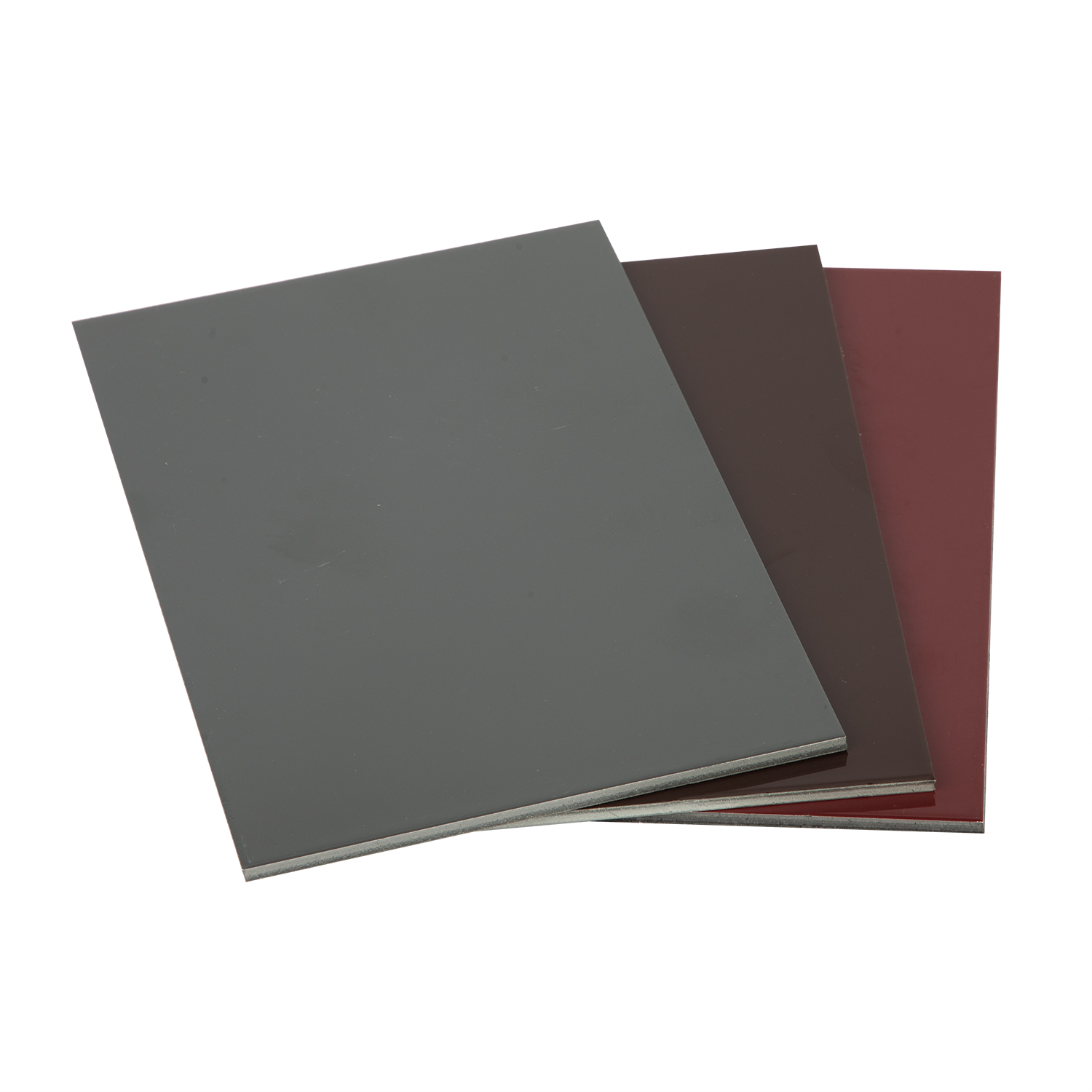
Your building facade serves as a massive visual asset. Poor surface coatings destroy this valuable asset within a few short years.
Architectural coatings differ vastly in chemical composition. You must contrast PVDF (Polyvinylidene Fluoride) and FEVE (Fluoroethylene Vinyl Ether) against standard PE (polyester) coatings.
PVDF systems require a minimum of 70% Kynar resin. The carbon-fluorine bonds in PVDF resins are among the strongest chemical bonds in nature. They resist UV breakdown, acid rain, and airborne industrial pollutants. FEVE coatings offer higher gloss levels while maintaining similar long-term durability. Standard PE coatings possess weak chemical bonds. Ultraviolet radiation breaks these bonds effortlessly. They degrade rapidly under sun exposure. They belong strictly indoors.
Chart: Architectural Coating Performance Comparison
| Coating Type | Resin Technology | UV Resistance | Ideal Application |
|---|---|---|---|
| Standard PE | Polyester | Low | Interiors, short-term signage |
| PVDF | Fluoropolymer (70% Kynar) | Exceptional | High-rise facades, harsh climates |
| FEVE | Fluoropolymer (Glossy) | Exceptional | Vibrant commercial exteriors |
Paint durability correlates directly to application layer thickness. You must verify exact micron levels on the TDS.
Baseline standards dictate specific thickness ranges. Two-coat systems require 25-35 microns. Three-coat systems require 35-45 microns. Substandard suppliers cut costs quietly. They aggressively reduce the primer or clear coat micron thickness. The paint matrix degrades rapidly when layers are too thin. It releases the pigment powder in a destructive process called chalking.
The industry frequently advertises 20-year warranties. These bold marketing claims rarely reflect legal reality. You must read the fine print closely.
A specification sheet provides claims. A third-party test report provides reality. You must bridge the gap between these two vital documents.
Our industry faces a severe compliance pain point. Many specifications rely heavily on isolated golden sample claims. A manufacturer builds a perfect sample panel. They send this single optimized panel to a lab for certification. They then mass-produce inferior panels under the exact same certification umbrella. You need continuous verification processes to avoid this trap.
Fire testing requires rigorous, skeptical scrutiny. Small-scale material tests only measure surface burning characteristics. ASTM E84 serves as a prime example. It does not simulate real-world building fires. You must look for full wall assembly tests instead. NFPA 285 represents the gold standard globally. It evaluates actual fire propagation on a full-scale multi-story wall assembly.
Weather resistance also demands mandatory compliance verification. Verify ASTM E283 data for strict air infiltration limits. Excessive air infiltration destroys building energy efficiency. Review ASTM E331 test reports for water penetration resistance. This test simulates a severe hurricane-driven rainstorm. If a supplier cannot produce these specific reports, their panel system will likely leak.
You must become an aggressive document auditor. Do not accept a low-resolution PDF logo as definitive proof of compliance.
Instruct your buying team to check the exact dates on certification documents. Expired certificates indicate a severe lack of ongoing compliance. Verify the formal accreditation of the testing laboratory. Look for globally recognized names like Intertek, SGS, or UL.
Finally, ensure the tested product matches the exact spec you are purchasing. Substandard factories often share test reports registered to entirely different corporate entities. Check the component list inside the report. A NFPA 285 pass for a 0.50mm skin FR panel does not cover a 0.30mm skin PE panel.
Evaluating a single TDS is fundamentally insufficient. Sourcing success depends entirely on actual manufacturing execution.
Your true evaluation criterion is scale. Can the manufacturer maintain perfect specs across a 10,000 sqm order? Many facilities produce great samples but fail spectacularly during mass production. Batch-to-batch consistency separates premium manufacturers from unreliable material brokers.
You must investigate the factory floor. Ask probing questions about their operational setup.
Do they compound their own core materials? Core compounding is a messy, highly technical chemical process. Factories outsourcing this step buy pre-mixed core pellets from third-party brokers. They lose all visibility into the actual mineral content. An in-house compounding facility guarantees strict recipe control.
Do they operate an in-house continuous coil coating line? Applying paint in-house ensures absolute color consistency across massive production runs. A continuous line cleans, primes, paints, and bakes the aluminum coil in one uninterrupted pass. Buying pre-painted coils from third-party vendors often results in heavily mismatched facade panels.
Protect your project by formalizing the vetting process. Demand transparency before issuing large purchase orders.
Request a documented QA/QC manual. Review their incoming raw material inspection procedures. Ask for ISO 9001 and ISO 14001 factory certifications. These critical documents help you evaluate their overall production maturity. They also reveal their environmental management standards.
Sourcing architectural cladding is fundamentally about mitigating risk through verifiable data. You are not just comparing bottom-line prices. You are securing the structural integrity and fire safety of a permanent building.
The technical data sheet provides a starting point, not a guarantee. You must dissect core compositions, verify exact skin thicknesses, and audit paint micron levels relentlessly. Refuse to accept generic claims. Do not rely on isolated golden samples.
Procurement and architectural teams must demand accountability. We advise you to request unredacted third-party test reports immediately. Establish strict production traceability protocols. Always demand physical production samples before finalizing any specification. Following these rigorous steps ensures your chosen cladding performs exactly as designed for decades to come.
A: You cannot measure the skin thickness accurately while the panel remains intact. First, you must strip away the paint layer using a chemical etching solution or strong solvent. Next, use a precision digital caliper or micrometer to measure the bare aluminum. Measuring a painted panel gives a falsely inflated thickness reading.
A: PE cores remain highly useful for specific, code-compliant applications. They dominate single-story retail environments, indoor corporate identity projects, and temporary exhibition signage. In these low-risk scenarios, strict high-rise fire codes do not apply. Their excellent flexibility and lower production costs make them ideal for these non-architectural use cases.
A: ASTM E84 tests surface burning characteristics on a very small scale. It only proves the material's surface resists flame spread. NFPA 285 tests actual fire propagation on a full-scale multi-story wall assembly. NFPA 285 proves how the entire panel, metal framing, and insulation system react together during a catastrophic building fire.