Views: 0 Author: Site Editor Publish Time: 2026-10-01 Origin: Site
Selecting the right panel thickness is never just a minor procurement detail. It directly dictates the structural integrity, visual longevity, and total installed cost of your entire signage project. Underspecifying materials often leads to "oil-canning"—a frustrating surface waviness—and dangerous wind-load failures outdoors. Conversely, overspecifying materials drains project margins unnecessarily and adds needless weight to the supporting structure. You need to hit the exact sweet spot for your specific application. This guide breaks down how to perfectly match panel and aluminum skin dimensions to your distinct signage needs. We will explore structural thresholds, fabrication requirements, and environmental factors. By the end, you will understand how to choose the precise signage aluminum composite panel thickness to ensure optimal performance and long-term reliability.
Choosing the wrong panel thickness introduces serious physical and financial risks. Material failure rarely happens on installation day. It typically surfaces months later after seasonal temperature shifts and sustained weather exposure. These delayed failures damage brand reputation and force expensive rework. We must treat thickness selection as a primary structural decision rather than a simple aesthetic choice.
Temperature fluctuations cause metal components to expand and contract constantly. Improper tension on overly thin panels causes visible surface distortion. Industry professionals call this "oil-canning." It looks like uneven ripples or waves across the face of the sign. This distortion ruins the clean, flat presentation expected of modern branding. A high-gloss black sign board will magnify even minor oil-canning. It turns a premium storefront into a cheap-looking display. Proper panel thickness provides the necessary rigidity to resist these thermal stresses and maintain a perfectly flat face.
Exterior freestanding signs face intense dynamic pressure from wind gusts. Insufficient thickness leads to excessive flex during storms. This flexing concentrates stress directly at the mechanical mounting points. Over time, micro-cracking develops around the screws or rivets. These hairline fractures allow moisture to enter the core. Eventual fastener failure becomes inevitable. Heavy winds can completely tear a thin panel away from its frame. You must specify thicker panels to handle high wind-load areas safely.
On the opposite end of the spectrum, over-engineering destroys profitability. Using a heavy architectural-grade panel for simple interior signage is a massive financial waste. Thick panels cost significantly more per square meter. They also weigh more. Added weight increases shipping costs. It forces installers to use heavier-duty mounting hardware. It slows down the installation process. You erode project margins when you buy structural capacity you simply do not need.
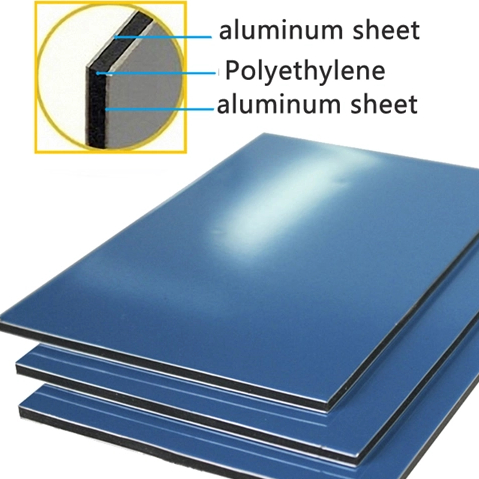
Many buyers misunderstand product specifications. We need to clear up the difference between the total sandwich measurement and the individual component measurements. A standard "3mm panel" refers to the entire completed sandwich. This includes the top aluminum sheet, the central core, and the bottom aluminum sheet. While overall thickness matters for rigidity, another metric dictates fabrication success.
The actual thickness of the outer aluminum layers determines how the material behaves under a router bit. This skin thickness separates a basic board from a highly workable signage-grade aluminum composite panel. We classify skin specs into three distinct tiers:
The core sitting between the aluminum skins dictates fire safety compliance. General outdoor signage relies on standard Polyethylene (PE) cores. PE cores offer excellent flexibility and moisture resistance. However, interior applications or high-rise exterior installations often face strict building codes. In these cases, you must specify Fire Retardant (FR) cores. FR cores contain mineral-filled centers resisting flame spread. Always check local municipal regulations before selecting your core material.
Raw thickness means nothing if the paint peels. The aluminum skin must pair with high-quality coatings. Manufacturers typically use polyester (PE) paints for interior or short-term exterior use. They use Polyvinylidene Fluoride (PVDF) for long-term outdoor exposure. A premium panel ensures intense adhesion between the metal and the coating. This prevents the surface from delaminating or chipping when the CNC router slices through the top layer.
Selecting the correct overall dimension requires matching material capabilities to specific environmental demands. We break down the three primary industry standards below. This framework helps you balance weight, cost, and structural performance.
Aluminum Composite Panel Thickness Application Framework
| Overall Thickness | Core Capabilities | Ideal Applications | Primary Limitations |
|---|---|---|---|
| 3mm Panels | Lightweight, easy to cut, highly cost-effective, excellent printability. | Interior retail displays, flat wall-mounted signs, real estate boards, short-term wayfinding. | Poor structural spanning capability. Requires a solid backing substrate for larger formats. |
| 4mm Panels | Increased rigidity, excellent routing dimensional stability, superior wind resistance. | Post-and-panel signs, exterior shopfront fascia, pylon faces, 3D constructed letters. | Heavier and more expensive than 3mm. Overkill for simple indoor poster backing. |
| 6mm Panels | Maximum rigidity, extreme impact resistance, handles massive wind loads. | Oversized freestanding monoliths, highway signage, structures with minimal internal frames. | Heavy to transport. Requires specialized heavy-duty mounting hardware and robust equipment. |
The 3mm profile dominates the print and cut industry. It provides a massive upgrade over traditional PVC foam boards or corrugated plastics. It stays perfectly flat when mounted directly against a wall. Installers love it because one person can easily carry a large sheet. You save significant money on material and labor. However, you must respect its structural limits. Never use a 3mm board to bridge a wide gap between two posts. It will eventually sag under its own weight.
Moving up to a 4mm profile unlocks advanced fabrication techniques. The extra millimeter of core material dramatically increases the stiffness-to-weight ratio. Fabricators rely on 4mm panels when building folded trays or box signs. The added depth ensures the folded corners remain sharp and stable. It also resists wind deflection much better than thinner alternatives. If you are building a sign standing alone in a parking lot, 4mm should be your minimum starting point.
You rarely see 6mm panels in standard strip mall signage. We reserve this massive profile for monumental tasks. Large pylon signs beside highways endure punishing wind gusts. A 6mm panel absorbs these impacts without transferring fatal stress to the internal steel frame. It allows designers to space internal support ribs much further apart. This reduces the total metal required inside the sign cabinet. The extreme rigidity justifies the premium price tag for large-scale projects.
Your chosen installation technique dictates your material requirements just as much as the final visual design. A panel behaving perfectly flat on a wall might fail completely when folded into a three-dimensional shape.
Dimensional signage often requires V-groove routing. The CNC machine cuts a 90-degree or 135-degree channel through the back aluminum skin and the core. It leaves only the front aluminum skin intact. The fabricator then folds the panel along this groove to create a seamless corner. This technique demands a minimum of 4mm overall thickness paired with a 0.21mm+ skin thickness. When you use thinner skins, the router bit leaves too little metal behind. The aluminum simply snaps in half during the fold. A robust core gives the router bit a stable path, ensuring consistent depth across the entire sheet.
The surface behind the sign dictates the necessary structural independence of the panel itself.
Aluminum composite materials grow and shrink as temperatures change. Dark-colored signs facing direct sunlight absorb immense amounts of solar radiation. The surface temperature can easily exceed ambient air temperature by forty degrees. This heat triggers rapid thermal expansion. Thicker panels handle the resulting internal shear forces much better than thin panels. When specifying a particular finish from a signage-grade aluminum composite panel supplier, you must adjust your installation methods. Darker signs require larger, oversized drill holes. You must leave room around the fastener shaft. If you lock the screws down too tightly on a dark, thin panel, the expanding metal has nowhere to go. It will buckle outward, destroying the flat visual plane.
Not all materials leaving a factory meet the demands of precision fabrication. Buying based purely on the lowest price often results in catastrophic shop-floor failures. You must vet your suppliers rigorously before committing to bulk purchases.
Manufacturing composite panels requires extreme precision. Advise your purchasing team to check the manufacturer’s stated thickness tolerance. A standard acceptable tolerance sits around ±0.2mm. Poorly manufactured boards might vary by a full millimeter from one edge to the other. Inconsistent thickness across a batch will completely ruin CNC routing depths. If the board suddenly gets thinner, your V-groove bit will slice entirely through the front face. If it gets thicker, the bit won't cut deep enough, making the panel impossible to fold.
Never buy a pallet of material based on a marketing brochure. Emphasize the importance of requesting official Technical Data Sheets (TDS) from the factory. You need to verify the specific alloy grade used for the skins. For example, a 1100 series aluminum is relatively soft. A 3003 series alloy contains manganese, making it significantly stronger and better suited for structural folding. The TDS will also reveal the exact skin thickness and the paint peel strength. These metrics separate a high-quality product from a cheap imitation.
Recommend ordering physical sample panels before committing to a full container load. Bring these samples into your own facility. Run them through your specific CNC router at your standard feed rates. Perform destructive testing. Fold the edges back and forth until they break. Score the paint and apply heavy tape to test the coating adhesion. This hands-on validation ensures the material behaves exactly as the data sheet promises.
Securing the right material specifications directly influences the lifespan and profitability of your installations. You must treat thickness as a calculated balance between overall rigidity, skin durability, and environmental demands.
When in doubt regarding an exterior or fabricated project, always default to a 4mm board featuring a 0.21mm skin to mitigate failure risks entirely. We highly encourage you to consult with a specialized material supplier today. Request their technical data sheets and align your precise material specs with your upcoming project requirements to guarantee lasting success.
A: Yes, provided it is flat-mounted against a rigid substrate like a brick wall or solid wooden backer. It performs exceptionally well in these supported conditions. However, you should never use 3mm panels to span open gaps or endure high wind loads independently, as they lack the required structural rigidity.
A: The aluminum skin will likely crack or split directly at the fold line during fabrication. This leads to immediate structural failure and allows moisture ingress into the core. For any V-groove routing and folding applications, industry experts recommend a minimum skin thickness of 0.20mm to prevent snapping.
A: Yes. While aluminum composite material remains generally lightweight compared to solid steel, moving from a 3mm to a 4mm profile adds roughly 25% to 30% more weight. Installers must factor this increase into the load-bearing capacity of wall brackets, support posts, and lifting labor.
A: Typically, no. Standard Polyethylene (PE) cores represent the industry standard for most outdoor freestanding signs. FR cores are generally only required for architectural building cladding, high-rise fascia, or specific indoor applications governed by strict local municipal fire safety codes.