Views: 0 Author: Site Editor Publish Time: 2026-09-03 Origin: Site
Matte finishes bring a sophisticated, non-reflective elegance to modern architecture. However, this premium aesthetic brutally exposes underlying material flaws. Minor surface issues like oil-canning or uneven coating become highly visible. You lack a glossy sheen to bounce light away from these imperfections. Achieving a flawless matte appearance demands strict alignment across three specific material components. You must carefully coordinate the aluminum alloy series, the core composition, and the coating chemistry. If one element fails, the entire facade suffers visible distortion or premature degradation. We designed this evaluation framework to help procurement teams and architects specify the exact grade needed. It helps you balance structural integrity and longevity without compromising your desired visual finish. By following these guidelines, you can ensure your next architectural project meets both aesthetic and structural demands flawlessly.
Matte surfaces interact differently than high-gloss panels when exposed to natural daylight. They absorb light rather than reflect it. This physical property makes them visually unforgiving. High-gloss facades easily hide minor substrate dents. Matte surfaces highlight these identical flaws instantly. Substrate waviness, commonly called oil-canning, ruins the intended premium appearance. You must select premium grades to prevent this specific optical distortion.
Choosing inferior material grades introduces severe project risks. Premature chalking degrades the aesthetic within a few short years. Color fading unevenly strips the building of its original design intent. Furthermore, weak panel grades warp heavily under seasonal thermal expansion. A cheap specification ultimately compromises the structural facade integrity.
We define a successful installation by meeting three non-negotiable criteria. First, you need zero optical distortion across the entire surface span. Second, gloss levels must remain entirely consistent across all production batches. Finally, the installation requires documented wind-load compliance. These elements ensure long-term structural safety and preserve architectural beauty.
The aluminum alloy series dictates the panel's mechanical strength and forming capabilities. You must align the alloy grade directly to the application environment.
1100 Series (Commercial Grade): This series features high purity and extreme malleability. However, it offers a noticeably lower tensile strength. Procurement teams should specify this series only for flat, low-impact, short-term signage. You must avoid the 1100 series for large-span exterior cladding. It lacks the rigidity needed to resist wind loads and maintain flatness.
3003 Series (Architectural Grade): Manufacturers alloy this series with manganese. This addition delivers roughly 20% greater strength than the 1100 series. It offers excellent workability for routing and folding. This series serves as the industry standard for a structurally sound matt color aluminum composite panel. It provides the best overall balance of procurement budget and long-term rigidity.
5005 Series (Premium Marine/Architectural Grade): This top-tier series contains magnesium alloys. It provides superior weather resistance and peak tensile strength. You will find it necessary for high-altitude, high-wind, or coastal environments. In these aggressive zones, structural failure represents a primary safety risk.
| Alloy Series | Primary Element | Tensile Strength | Best Application |
|---|---|---|---|
| 1100 | Pure Aluminum (99%) | Low | Interior signage, small displays |
| 3003 | Manganese | Medium-High | Standard exterior cladding, facades |
| 5005 | Magnesium | High | Coastal areas, high-wind zones |
Panel thickness directly correlates to structural performance and visual flatness. Choosing the wrong dimension leads to immediate aesthetic failure and potential code violations.
The 3mm Specification: In implementation reality, a 3mm panel remains prone to deflection on large exterior spans. Wind pressure easily pushes and pulls the thinner material. The best use cases include interior displays, small localized exterior accents, and standard retail signage. You should avoid stretching 3mm panels across wide architectural gaps.
The 4mm Specification: This thickness provides the absolute minimum required rigidity for exterior architectural facades and curtain walls. Building codes usually require 4mm panels to meet strict structural deflection limits. When evaluating cladding 3mm 4mm matt color aluminum, you must understand the industry baseline. A 4mm total thickness combined with a 0.5mm aluminum skin remains the non-negotiable standard for mid-to-high-rise construction.
The coating chemistry determines how long the panel survives harsh environmental exposure. A matte finish relies entirely on its topcoat to maintain its specific visual texture.
Polyester (PE) Coatings: PE coatings remain highly economical. However, they are highly susceptible to UV degradation and rapid chalking. As the polymer breaks down, the matte finish turns white and powdery. You should approve PE coatings only for interior applications. They require environments completely free from direct sunlight exposure.
PVDF (Polyvinylidene Fluoride) Coatings: PVDF serves as the global benchmark for exterior durability. This advanced resin system aggressively resists fading, chalking, and airborne pollutants. PVDF is strictly mandatory for any exterior matte finish. You must specify high-performance fluoropolymer systems, such as Kynar 500. This specification ensures a reliable 15-to-20-year color retention guarantee from the manufacturer.
Gloss Level Tolerance: Achieving a true matte appearance requires tight manufacturing control. You must specify a gloss level of 25% or below. Anything higher pushes the material into a satin or semi-gloss category. True matte formulations diffuse light perfectly to create a flat, solid color field.
The inner core material determines the panel's fire behavior. Ignorance of core types frequently leads to disastrous building fires and massive compliance liabilities.
LDPE (Low-Density Polyethylene) Cores: LDPE represents a severe risk assessment failure for large buildings. This core remains highly combustible. Many jurisdictions ban LDPE cores entirely for buildings over a specific height. You can only apply LDPE materials to ground-level, non-habitable, or temporary structures. Local fire codes must explicitly permit their use.
FR (Fire-Retardant) and A2 (Non-Combustible) Cores: Manufacturers formulate these secure cores using high volumes of mineral fillers. These fillers actively resist flame spread and reduce smoke generation. A2 cores are nearly entirely inorganic, offering the highest tier of fire safety. You must always cross-reference your matt color aluminum composite panel specifications against local building codes. Consult standards like ASTM E84 or EN 13501-1 before finalizing your material schedule.
Procuring matte materials requires rigorous vendor evaluation. A poor supplier will derail an otherwise perfectly engineered architectural plan.
Batch-to-Batch Consistency: Matte finishes are notoriously difficult to color-match across different production runs. Slight variations in paint mixing or oven temperatures alter the final gloss level. Mandate that your matt color aluminum composite panel supplier fulfills the entire project volume from a single continuous coating batch. This strategy eliminates mismatched panel shading on the final facade.
Certifications & Testing: Never rely on unverified marketing claims. Require verifiable third-party testing data. Ask for peeling strength metrics, which remain essential for clean routing and folding. Request updated fire rating certificates from recognized global testing laboratories.
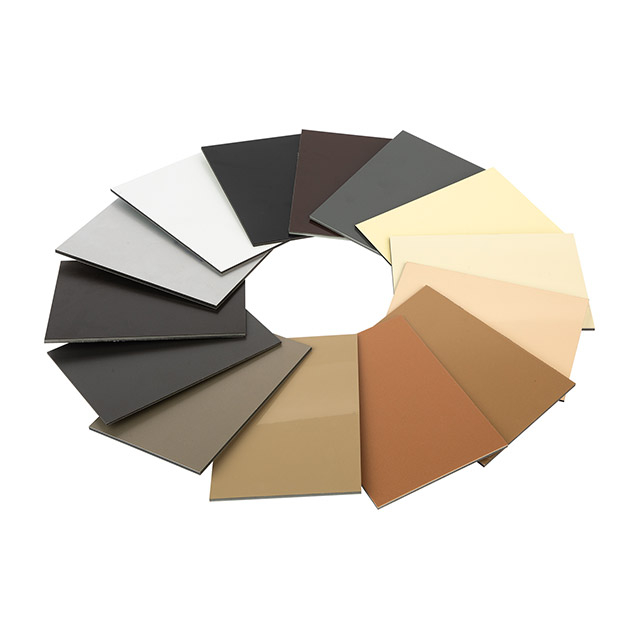
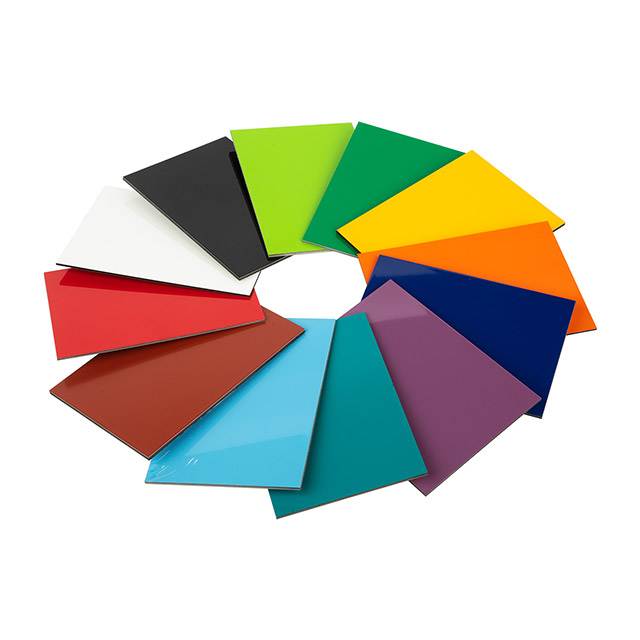
Sample Verification: Digital screens misrepresent matte finishes completely. Never approve a matte color from a digital PDF or website photo. Always request a physical A4-sized sample. Evaluate its light interaction and true gloss levels under the actual site lighting conditions before signing the purchase order.
Selecting the optimal material grade is a precise engineering formula. You achieve the best performance by combining a 3003 or 5005 architectural alloy, a robust 4mm panel thickness, a UV-resistant PVDF coating, and a code-compliant fire-retardant core. This specific configuration protects the sensitive matte aesthetic from physical distortion and environmental degradation.
A: Waviness, commonly known as oil-canning, occurs when the substrate lacks structural rigidity. This is typically caused by specifying too thin of an aluminum skin, such as 0.21mm instead of the recommended 0.5mm. Using a weaker 1100 series alloy also contributes. The material flexes under wind and thermal loads, and the matte finish visually amplifies these distortions.
A: Yes. Matte surfaces feature microscopic textures designed to diffuse light. Unfortunately, this texture can trap atmospheric dirt and pollutants more easily than smooth, glossy finishes. However, specifying high-quality PVDF coatings mitigates this issue. Premium PVDF formulations provide a self-cleaning, non-stick characteristic that allows rain to wash away accumulated debris.
A: Yes, you can confidently fabricate the material provided it meets strict quality standards. The panel must possess high peeling strength. It also requires an architectural-grade alloy, like the 3003 series, which tolerates mechanical stress. Finally, a high-quality PVDF coating formulation will easily stretch and flex along the routed fold without experiencing micro-cracking.